Need-Based Scholarships 2026: Your Guide to Funding College
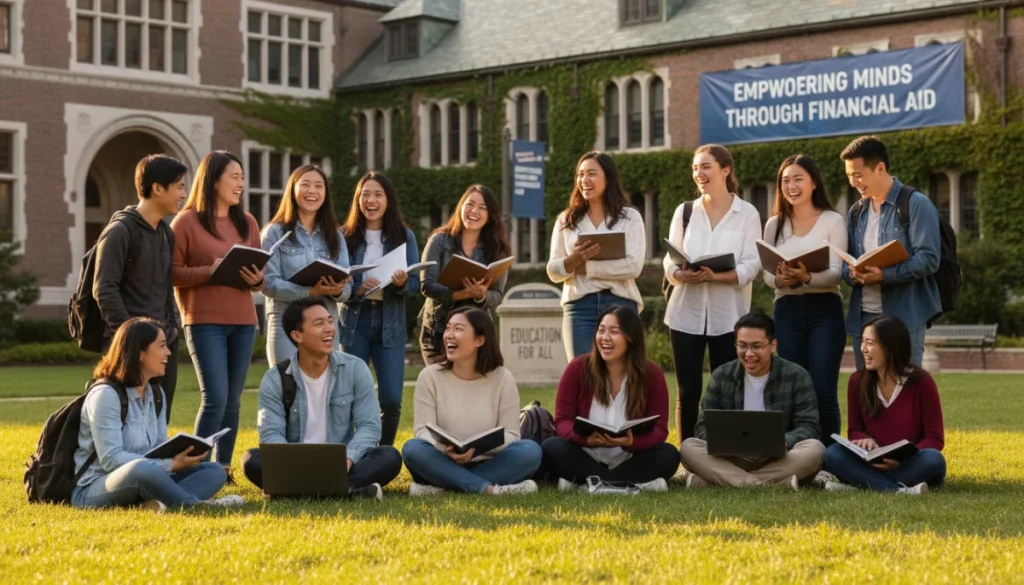
Need-based scholarships for 2026 United States students provide essential financial support to make higher education accessible for individuals and families who demonstrate financial necessity, moving beyond solely academic or athletic achievements.
Navigating the complex landscape of college financing can be daunting, but for 2026 United States students, understanding need-based scholarships 2026 is a critical first step towards making higher education a reality. These scholarships are specifically designed to bridge the financial gap for students whose families cannot fully cover tuition costs, shifting the focus from merit alone to genuine financial need. This comprehensive guide will illuminate the path to uncovering and securing these invaluable opportunities, ensuring that economic circumstances do not hinder educational aspirations.
Understanding Need-Based Aid: Beyond Merit
Need-based financial aid is a cornerstone of college affordability, offering a lifeline to countless students across the United States. Unlike merit-based scholarships, which reward academic excellence, athletic prowess, or specific talents, need-based aid focuses squarely on a student’s demonstrated financial situation. This distinction is crucial for families who may not have significant savings or high incomes but whose children possess the drive and potential for higher education.
The primary goal of need-based scholarships is to ensure that a student’s economic background does not become an insurmountable barrier to attending college. It creates a more equitable playing field, allowing students from all socioeconomic strata to pursue their academic dreams. The process typically involves a thorough assessment of a family’s income, assets, and household size to determine their Expected Family Contribution (EFC) or Student Aid Index (SAI).
Key Differences from Merit-Based Awards
While both types of scholarships aim to support students, their criteria and philosophy diverge significantly. Understanding these differences helps students target their applications more effectively.
- Focus: Need-based aid centers on financial necessity, while merit-based aid rewards achievements.
- Eligibility: Need-based requires demonstrating financial hardship; merit-based requires strong academic records, specific talents, or leadership qualities.
- Application: Need-based often requires filing federal forms like the FAFSA; merit-based typically involves essays, recommendations, and portfolios.
This fundamental understanding empowers students and families to prioritize their search and application efforts, ensuring they focus on the opportunities most relevant to their individual circumstances. For many, a combination of both types of aid can create a robust financial package.
Eligibility Criteria and the FAFSA/CSS Profile
Determining eligibility for need-based scholarships hinges primarily on a comprehensive assessment of a family’s financial situation. For 2026 United States students, two critical forms stand at the forefront of this evaluation: the Free Application for Federal Student Aid (FAFSA) and, for some institutions, the CSS Profile. These documents are not merely applications; they are the gateways to unlocking a vast array of financial assistance.
The FAFSA, administered by the U.S. Department of Education, is used to determine a student’s eligibility for federal student aid, including Pell Grants, federal student loans, and federal work-study programs. Many state and institutional need-based scholarships also rely on FAFSA data. It collects detailed information about income, assets, and family size to calculate the Student Aid Index (SAI), which replaced the Expected Family Contribution (EFC) as of the 2024-2025 academic year. The lower the SAI, the greater the demonstrated financial need.
Navigating the FAFSA and CSS Profile
Completing these forms accurately and on time is paramount. Errors or delays can significantly impact the amount of aid a student receives. It is advisable to gather all necessary financial documents well in advance.
- FAFSA: Available October 1st each year. Use prior-prior year tax information (e.g., for 2026-2027 academic year, use 2024 tax data).
- CSS Profile: Required by approximately 200 private colleges and universities. It delves deeper into family finances, often considering home equity and non-custodial parent income.
- Accuracy: Double-check all entries, as even minor mistakes can lead to delays or reduced aid offers.
Understanding the nuances of these applications is essential. Many colleges have specific deadlines for financial aid applications, which can be earlier than the admission application deadline. Missing these can mean missing out on valuable need-based aid.
Sources of Need-Based Scholarships for 2026 Students
Need-based scholarships don’t originate from a single source; they are offered by a diverse array of organizations, each with its own criteria and application process. For 2026 United States students, knowing where to look is as important as understanding how to apply. These opportunities can come from federal and state governments, colleges and universities themselves, and a myriad of private foundations and community organizations.
Federal and state governments often provide significant need-based aid, with the Pell Grant being one of the most well-known federal programs. State-specific grants and scholarships also exist, often tied to residency requirements and state university systems. These governmental sources are typically accessed directly through the FAFSA, simplifying the application process for students.
Exploring Institutional and Private Opportunities
Beyond government aid, a wealth of opportunities awaits at the institutional and private levels. These sources often offer more tailored support and can significantly augment a student’s financial package.
- Colleges and Universities: Many institutions have their own endowments and scholarship programs specifically for students demonstrating financial need, often requiring the FAFSA and/or CSS Profile.
- Private Foundations: Numerous foundations, often established by philanthropists or corporations, offer need-based scholarships. These can be general or targeted towards specific fields of study, demographics, or geographic regions.
- Community Organizations: Local Rotary Clubs, Chambers of Commerce, religious organizations, and other community groups frequently offer scholarships to local students based on need.
Proactive research is key to uncovering these diverse sources. Websites like Fastweb, Scholarship.com, and BigFuture by College Board can be excellent starting points for identifying potential scholarships. Remember to check local resources as well, as these often have less competition.
Crafting a Compelling Application for Need-Based Aid
While financial need is the primary criterion for these scholarships, a well-crafted application can significantly enhance a student’s chances of success. For 2026 United States students, this means presenting a clear, honest, and compelling narrative that complements the financial data provided in the FAFSA or CSS Profile. It’s about demonstrating not just need, but also potential and commitment.
Many need-based scholarships, especially those from private foundations, require essays, letters of recommendation, and personal statements. These components are opportunities to articulate the unique challenges faced, the determination to overcome them, and the aspirations for the future. A strong essay can humanize the financial figures, allowing scholarship committees to see the individual behind the numbers.

Tips for Standing Out in the Application Process
Even with demonstrated need, competition can be stiff. Here are some strategies to make your application shine:
- Be Authentic: Share your story honestly and with genuine emotion. Committees want to understand your journey and motivations.
- Highlight Achievements: While need-based, demonstrating academic effort, extracurricular involvement, or community service can show your commitment and potential.
- Proofread Meticulously: Errors in grammar or spelling can detract from your message. Have trusted individuals review your application.
Remember, the application is your chance to advocate for yourself. It’s not just about what you need, but what you plan to do with the opportunity. Connect your financial need to your educational goals and how the scholarship will enable you to achieve them.
Common Pitfalls and How to Avoid Them
Applying for financial aid and scholarships can be a complex process, and it’s easy to make mistakes that could jeopardize your chances of receiving crucial funding. For 2026 United States students, being aware of common pitfalls and proactively avoiding them is just as important as knowing where to find opportunities. These errors often stem from incomplete information, missed deadlines, or a lack of understanding of the application requirements.
One of the most frequent mistakes is failing to submit applications on time. Scholarship deadlines are often strict, and a late submission, even by a day, can mean automatic disqualification. It is essential to create a detailed calendar of all application deadlines, including those for the FAFSA, CSS Profile, and individual scholarships, and to work backward to ensure ample time for completion.
Strategies for a Smooth Application Journey
By anticipating potential issues, students can navigate the application process more effectively and increase their likelihood of success.
- Start Early: Begin gathering financial documents and researching scholarships months in advance of deadlines.
- Read Instructions Carefully: Each scholarship has unique requirements. Missing a single component can lead to rejection.
- Seek Assistance: Don’t hesitate to ask for help from high school counselors, college financial aid offices, or trusted adults.
Another common pitfall is providing inaccurate or inconsistent information across different applications. Ensure that all financial data, family details, and personal statements are consistent. Inconsistencies can raise red flags and delay the processing of your application, or even lead to disqualification. Honesty and thoroughness are paramount throughout the entire process.
Maximizing Your Scholarship Potential for 2026
Securing need-based scholarships for 2026 United States students requires a strategic, multi-faceted approach. It’s not just about applying to one or two programs; it’s about casting a wide net, understanding the nuances of each opportunity, and consistently presenting yourself as a deserving candidate. Maximizing your potential means being persistent, organized, and resourceful in your search and application efforts.
Beyond the major federal and institutional aid, many smaller, less competitive scholarships exist. These might come from local businesses, professional organizations, or alumni associations. While individually they might offer smaller amounts, collectively they can significantly reduce the financial burden of college. Never underestimate the power of combining multiple smaller awards.
Long-Term Planning and Continuous Effort
Financial aid is often an annual process, so planning extends beyond the initial application. Maintaining good academic standing and staying involved in extracurriculars can be beneficial for renewable scholarships.
- Maintain Strong Academics: While need-based, good grades can enhance your overall profile and make you eligible for a wider range of awards.
- Community Engagement: Volunteering and community service demonstrate character and commitment, qualities often valued by scholarship committees.
- Network: Talk to counselors, teachers, and community leaders. They often know about lesser-known scholarship opportunities.
Remember that the financial aid landscape can change, so staying informed about updates to FAFSA, institutional policies, and new scholarship programs is crucial. A proactive and sustained effort throughout your high school career and into college will yield the best results in maximizing your scholarship potential.
| Key Aspect | Description |
|---|---|
| What are Need-Based Scholarships? | Financial aid awarded based on a student’s demonstrated financial necessity, not solely academic merit. |
| Key Application Forms | FAFSA (Free Application for Federal Student Aid) and CSS Profile are essential for determining eligibility. |
| Sources of Aid | Federal and state governments, colleges, universities, and private organizations offer these scholarships. |
| Application Strategy | Craft compelling essays, meet deadlines, and accurately provide financial information to stand out. |
Frequently Asked Questions About Need-Based Scholarships
The Student Aid Index (SAI) is an eligibility index number calculated from the information provided on your FAFSA. It determines your eligibility for federal and institutional financial aid. A lower SAI indicates a greater financial need, potentially leading to more aid.
Yes, many students successfully combine both types of scholarships. Colleges often use merit aid to attract strong students and then use need-based aid to ensure those students can afford to attend. This combination can create a robust financial aid package.
No, scholarships, including need-based ones, are considered gift aid and do not need to be repaid. This is a significant advantage over student loans, which accrue interest and must be paid back after graduation.
If your family experiences a significant change in financial circumstances (e.g., job loss, medical emergency), you can appeal your financial aid award. Contact the financial aid office of your prospective college to discuss a professional judgment review.
Eligibility for international students varies significantly by institution. While federal aid is typically for U.S. citizens and eligible non-citizens, some private colleges and foundations offer need-based aid to international students. Research specific university policies.
Conclusion
For 2026 United States students, the journey to higher education doesn’t have to be limited by financial constraints. Understanding and actively pursuing need-based scholarships offers a powerful pathway to making college affordable and accessible. By diligently completing the FAFSA and CSS Profile, exploring diverse scholarship sources, crafting compelling applications, and avoiding common pitfalls, students can significantly increase their chances of securing the funding they need. This proactive approach not only lightens the financial burden but also empowers students to focus on their academic and personal growth, ultimately shaping a brighter future.