Medicaid Expansion 2026: Coverage, Eligibility & Impact

Medicaid expansion in 2026 significantly broadens healthcare access for millions of low-income Americans by extending eligibility to those earning up to 138% of the federal poverty level.
Medicaid Expansion 2026 is poised to reshape the healthcare landscape for millions of Americans, bringing crucial changes to eligibility and coverage. This comprehensive guide will navigate what these developments mean for your access to essential medical services.
The Genesis of Medicaid Expansion: A Brief History
Understanding Medicaid expansion in 2026 requires a look back at its origins and evolution. The Affordable Care Act (ACA) of 2010 introduced the option for states to expand Medicaid eligibility, primarily to cover nearly all non-elderly adults with incomes up to 138% of the federal poverty level (FPL). This was a monumental shift from previous Medicaid rules, which typically limited eligibility to specific categories like pregnant women, children, and individuals with disabilities.
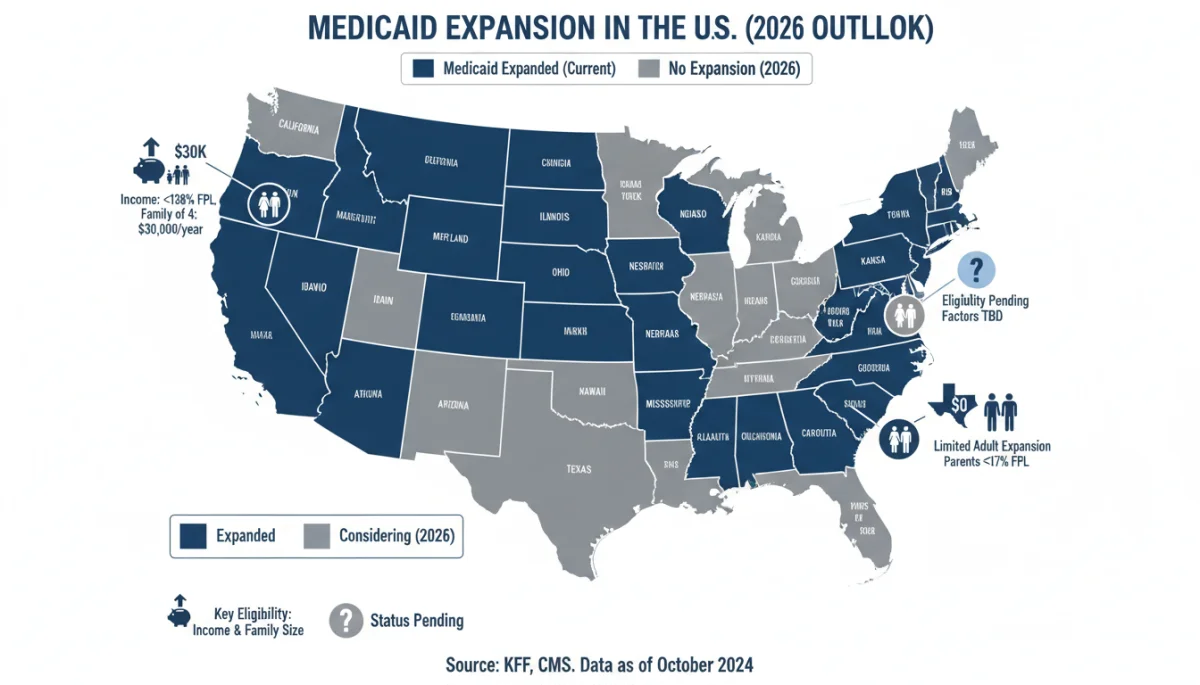
Initially, the ACA mandated this expansion for all states, but a 2012 Supreme Court ruling made it optional. This decision led to a fragmented healthcare landscape where some states embraced expansion, while others opted out, creating significant disparities in coverage across the nation. The ongoing debate and gradual adoption by more states highlight the complex interplay of federal policy, state budgets, and public health needs.
Key Milestones in Medicaid Expansion
- 2010: Affordable Care Act (ACA) signed into law, including Medicaid expansion provisions.
- 2012: Supreme Court rules Medicaid expansion optional for states.
- Ongoing: States continue to adopt or debate Medicaid expansion, leading to varied healthcare access.
The historical context reveals a persistent effort to bridge gaps in healthcare access for vulnerable populations. As we approach 2026, the implications of these past decisions continue to influence policy discussions and the practical realities of healthcare for millions of Americans. The journey of Medicaid expansion is one of evolving policy, legal challenges, and a continuous push to ensure more people have access to necessary medical care.
Who Benefits? Eligibility Criteria for Medicaid Expansion in 2026
One of the most critical aspects of Medicaid Expansion 2026 is understanding who qualifies for coverage. The primary beneficiaries are adults under 65 with incomes up to 138% of the Federal Poverty Level (FPL). This includes individuals who previously fell into a coverage gap, earning too much for traditional Medicaid but too little to qualify for subsidies to purchase private insurance on the ACA marketplaces. The expansion aims to close this gap, providing a safety net for millions.
Eligibility is not just about income; it also considers household size. The FPL threshold adjusts based on the number of people in a household, meaning a single individual will have a different income limit than a family of four. States that have expanded Medicaid follow these federal guidelines, ensuring a more standardized approach to eligibility for this specific population group.
Income Thresholds and Household Size
For 2026, while exact FPL numbers will be released closer to the date, the general principle remains: individuals and families whose income falls at or below 138% of the FPL are eligible. For instance, in 2023, 138% of the FPL for an individual was approximately $20,120 annually, and for a family of three, it was around $34,307. These figures are subject to annual adjustments for inflation and economic factors.
- Single Individual: Income up to 138% FPL.
- Family of Three: Income up to 138% FPL for their household size.
- No Asset Test: In most expansion states, there is no asset limit for eligibility, focusing solely on income.
The expansion specifically targets low-income adults who do not qualify for other coverage programs and are not elderly or disabled enough to meet traditional Medicaid criteria. This broadens the safety net significantly, aiming to reduce the number of uninsured individuals and improve health outcomes across the board. Understanding these criteria is the first step for many in securing vital healthcare coverage.
Coverage Details: What Services Does Expanded Medicaid Include?
For those eligible under Medicaid Expansion 2026, the scope of covered services is comprehensive, designed to provide essential healthcare benefits. While specific details can vary slightly by state, federal guidelines ensure a robust set of services. This comprehensive coverage is a significant advantage, as it typically includes a wide array of medical, behavioral, and preventative care without the high out-of-pocket costs often associated with private insurance plans.
Expanded Medicaid coverage generally includes physician visits, hospital stays, prescription drugs, mental health services, substance use disorder treatment, laboratory services, and preventative care such as vaccinations and screenings. This broad spectrum of services is crucial for managing chronic conditions, addressing acute illnesses, and promoting overall well-being among beneficiaries.
Essential Health Benefits Under Medicaid
The ACA established a set of ten essential health benefits that most health plans, including expanded Medicaid, must cover. These benefits ensure that individuals receive comprehensive care across various medical needs. The inclusion of these services under Medicaid expansion means that beneficiaries can access a full range of preventative and curative treatments.
- Ambulatory patient services: Outpatient care without hospital admission.
- Emergency services: Care for serious medical conditions.
- Hospitalization: Inpatient care for various medical needs.
- Maternity and newborn care: Services before and after birth.
- Mental health and substance use disorder services: Including behavioral health treatment.
- Prescription drugs: Access to necessary medications.
- Rehabilitative and habilitative services and devices: To help people recover or acquire skills.
- Laboratory services: Diagnostic tests and analyses.
- Preventive and wellness services and chronic disease management: Screenings, immunizations, and care for ongoing conditions.
- Pediatric services: Including oral and vision care for children.
This extensive list ensures that individuals covered by expanded Medicaid have access to care that addresses both immediate health concerns and long-term wellness. The goal is to provide a holistic approach to healthcare, reducing financial barriers and improving health outcomes for low-income populations.
The Impact on States: Economic and Health Outcomes
The decision for states to adopt Medicaid Expansion 2026 carries significant implications, not only for the health of their populations but also for their economies. States that have expanded Medicaid have generally seen improvements in health outcomes, including reductions in mortality rates, increased access to preventative care, and better management of chronic diseases. This leads to a healthier workforce and reduced strain on emergency rooms, which often serve as a costly primary care source for the uninsured.
Economically, expansion brings substantial federal funding into states. The federal government covers a significant portion of the costs for the newly eligible population, often 90% or more. This influx of federal dollars can stimulate local economies through job creation in the healthcare sector, increased spending by beneficiaries, and reduced uncompensated care costs for hospitals. Hospitals, in particular, often see improved financial stability as fewer patients are unable to pay for services.
Benefits Beyond Healthcare Access
The benefits extend beyond direct healthcare access. Studies have shown that Medicaid expansion can lead to a decrease in medical debt and bankruptcies, as individuals are no longer burdened by overwhelming medical bills. This financial relief can have a ripple effect, improving overall economic stability for low-income families and communities. It also frees up state funds that might otherwise be used for uncompensated care, allowing for investment in other critical areas.
However, some states have expressed concerns about the state’s share of funding and potential impacts on existing healthcare systems. Debates often revolve around the long-term fiscal responsibility and the balance between federal support and state budget constraints. Despite these concerns, the overwhelming evidence points to positive economic and health benefits for states that have expanded Medicaid, making it a crucial policy decision for public welfare.
Navigating the Application Process for Medicaid Expansion
For those interested in securing coverage through Medicaid Expansion 2026, understanding the application process is key. The process is designed to be accessible, primarily through state Medicaid agencies or the Health Insurance Marketplace (Healthcare.gov). While specific steps can vary by state, the general approach involves providing personal and financial information to determine eligibility based on income and household size.
Applicants typically need to provide proof of income, residency, and citizenship or lawful immigration status. This information allows the state agency to verify eligibility against federal and state guidelines. Many states offer online applications, making the process more convenient, alongside options for phone or in-person assistance for those who need it.
Steps to Apply for Expanded Medicaid
The application process is usually straightforward, aiming to enroll eligible individuals as efficiently as possible. It is important to gather all necessary documentation before starting the application to avoid delays. Assistance is often available through navigators, community health centers, or social workers who can guide applicants through the complexities.
- Gather Documentation: Collect proof of income (pay stubs, tax returns), proof of residency (utility bills), and identification (driver’s license, birth certificate).
- Choose Application Method: Apply online through your state’s Medicaid website or Healthcare.gov, by phone, or in person at a local Medicaid office.
- Complete the Application: Fill out all required sections accurately and completely.
- Submit and Follow Up: Submit the application and respond promptly to any requests for additional information.
- Receive Decision: You will be notified of your eligibility status and next steps if approved.
It’s also important to remember that Medicaid enrollment is open year-round, unlike marketplace plans which have specific open enrollment periods. This means eligible individuals can apply for coverage at any time. Staying informed about your state’s specific requirements and available resources can greatly simplify the application journey and ensure timely access to healthcare benefits.
Future Outlook: What’s Next for Medicaid Expansion Beyond 2026?
As we look beyond Medicaid Expansion 2026, the future of this vital program remains a topic of ongoing discussion and potential evolution. While many states have embraced expansion, a handful still have not, leaving millions without this critical safety net. Future policy debates will likely continue to focus on encouraging these remaining states to expand, potentially through enhanced federal incentives or new legislative approaches.
Beyond state adoption, there are ongoing conversations about the program’s structure and funding. Discussions may include potential adjustments to the federal matching rates, strategies to improve care coordination, and efforts to address social determinants of health more comprehensively within Medicaid. The goal is to ensure the program remains sustainable and effective in meeting the healthcare needs of low-income Americans.
Potential Policy Shifts and Innovations
Innovations within Medicaid are also on the horizon. States are increasingly exploring waivers that allow for tailored programs, such as those addressing homelessness, food insecurity, or workforce development, recognizing that health is influenced by more than just medical care. These holistic approaches aim to improve health outcomes by tackling underlying social and economic factors.
- Increased State Adoption: Continued federal and advocacy efforts to encourage non-expansion states.
- Program Innovation: Exploration of waivers for social determinants of health.
- Funding Adjustments: Ongoing debate about federal matching rates and state contributions.
- Care Model Evolution: Focus on integrated care, value-based purchasing, and population health management.
The political landscape will undoubtedly play a significant role in shaping Medicaid’s future. Changes in federal administrations or congressional priorities could lead to new legislative proposals or modifications to existing policies. Regardless of these potential shifts, the fundamental objective of Medicaid—to provide essential healthcare to vulnerable populations—is likely to remain a core tenet of the U.S. healthcare system.
| Key Aspect | Brief Description |
|---|---|
| Eligibility | Adults under 65 with incomes up to 138% of the Federal Poverty Level (FPL). |
| Covered Services | Comprehensive benefits including physician visits, hospital stays, prescription drugs, mental health, and preventative care. |
| State Impact | Improved health outcomes, reduced uncompensated care, and federal funding influx stimulating local economies. |
| Application | Apply through state Medicaid agencies or the Health Insurance Marketplace, year-round enrollment. |
Frequently Asked Questions About Medicaid Expansion
The primary goal is to extend affordable healthcare coverage to low-income adults who previously did not qualify for Medicaid and could not afford private insurance, thereby reducing the number of uninsured Americans and improving public health outcomes.
States adopting Medicaid expansion typically see improved health outcomes for their populations, reduced uncompensated care costs for hospitals, and an economic boost from federal funding inflows and job creation in the healthcare sector.
In most states that have expanded Medicaid, there is no asset test for eligibility. Qualification is primarily based on income relative to the Federal Poverty Level (FPL) and household size, simplifying access for many low-income individuals.
Yes, unlike private insurance plans on the marketplace that have specific open enrollment periods, Medicaid enrollment is open year-round. Eligible individuals can apply for coverage at any point during the year.
Expanded Medicaid typically covers a comprehensive range of essential health benefits, including doctor visits, hospital care, prescription drugs, mental health services, substance use disorder treatment, and preventative care services.
Conclusion
Medicaid Expansion 2026 represents a critical component of the American healthcare system, offering a lifeline to millions of low-income individuals and families. Its continued implementation and evolution underscore a commitment to broader healthcare access, improved public health, and economic stability. As the landscape continues to shift, staying informed about eligibility, coverage, and application processes will be essential for those seeking to benefit from this vital program.