Federal vs. State Healthcare Programs 2026: Which Offers Better Benefits?
Comparing federal and state healthcare programs in 2026 reveals distinct differences in coverage, eligibility, and costs, making the choice dependent on individual circumstances and state-specific offerings.
Navigating the complex landscape of healthcare in the United States can be daunting, especially when trying to understand the nuances between federal and state programs. This Comparison 2026: Federal vs. State Programs – Which Offers Better Healthcare Benefits? aims to demystify these options, providing clarity on what each offers and helping you make informed decisions for your health and financial well-being.
Understanding the Federal Healthcare Landscape in 2026
Federal healthcare programs form the bedrock of health coverage for millions of Americans, providing essential services and financial protection. These programs are typically standardized across all states, though their implementation can sometimes vary. The year 2026 brings some anticipated adjustments, focusing on sustainability and expanding access.
Key federal initiatives include Medicare, Medicaid (jointly funded but federally mandated), TRICARE, and the Affordable Care Act (ACA) marketplace subsidies. Each serves a specific demographic and has its own set of eligibility requirements and benefit structures. Understanding these foundational programs is crucial before diving into state-specific variations.
Medicare: coverage for seniors and certain disabilities
Medicare is a federal health insurance program primarily for people aged 65 or older, younger people with certain disabilities, and people with End-Stage Renal Disease. It comprises several parts, each covering different services:
- Part A (Hospital Insurance): Covers inpatient hospital stays, skilled nursing facility care, hospice care, and some home health care.
- Part B (Medical Insurance): Covers certain doctors’ services, outpatient care, medical supplies, and preventive services.
- Part C (Medicare Advantage): An alternative to original Medicare offered by private companies approved by Medicare, bundling Parts A, B, and often D.
- Part D (Prescription Drug Coverage): Helps cover the cost of prescription drugs.
The program continues to evolve, with 2026 seeing potential adjustments to premium costs and coverage for new medical technologies. Beneficiaries should review their options annually, especially during the open enrollment period, to ensure their plan still meets their needs.
Overall, federal programs like Medicare provide a robust safety net for specific populations. Their uniform nature ensures a baseline of care, regardless of where one resides, although supplementary plans and state-level assistance can further enhance coverage.
Exploring State-Specific Healthcare Initiatives in 2026
While federal programs provide a broad framework, state healthcare initiatives in 2026 play a vital role in tailoring benefits to local needs and populations. These programs often fill gaps left by federal coverage or offer enhanced services that address unique state demographics and health challenges. The degree of state involvement can vary significantly, leading to a diverse landscape of options.
States have considerable autonomy in designing and implementing their own health programs, especially when it comes to Medicaid expansion, public health initiatives, and subsidies for private insurance. This flexibility allows states to innovate and respond directly to the health priorities of their residents, often resulting in more localized and sometimes more comprehensive benefits for specific groups.
Medicaid expansion and state-funded programs
Medicaid, while federally mandated, is administered by states, giving them significant control over eligibility and the scope of services. Many states have opted to expand Medicaid under the ACA, extending coverage to more low-income adults. In 2026, states continue to refine their Medicaid programs, often adding services beyond the federal minimums, such as enhanced dental care, vision services, or behavioral health support.
Beyond Medicaid, states also fund their own health programs. These might include initiatives for:
- Children’s Health Insurance Programs (CHIP): Provides low-cost health coverage to children in families who earn too much money to qualify for Medicaid but cannot afford private insurance.
- Mental Health and Substance Use Disorder Services: Many states operate dedicated programs to address these critical health needs, often with broader eligibility criteria than federal programs.
- Assistance for specific diseases: Some states have programs targeting conditions like HIV/AIDS, cancer, or rare diseases, offering financial aid or specialized care.
The variety of state-specific programs means that healthcare benefits can look very different from one state to another. This highlights the importance of researching what is available in your particular state, as it could significantly impact your overall coverage and out-of-pocket costs.
Eligibility requirements: federal vs. state programs
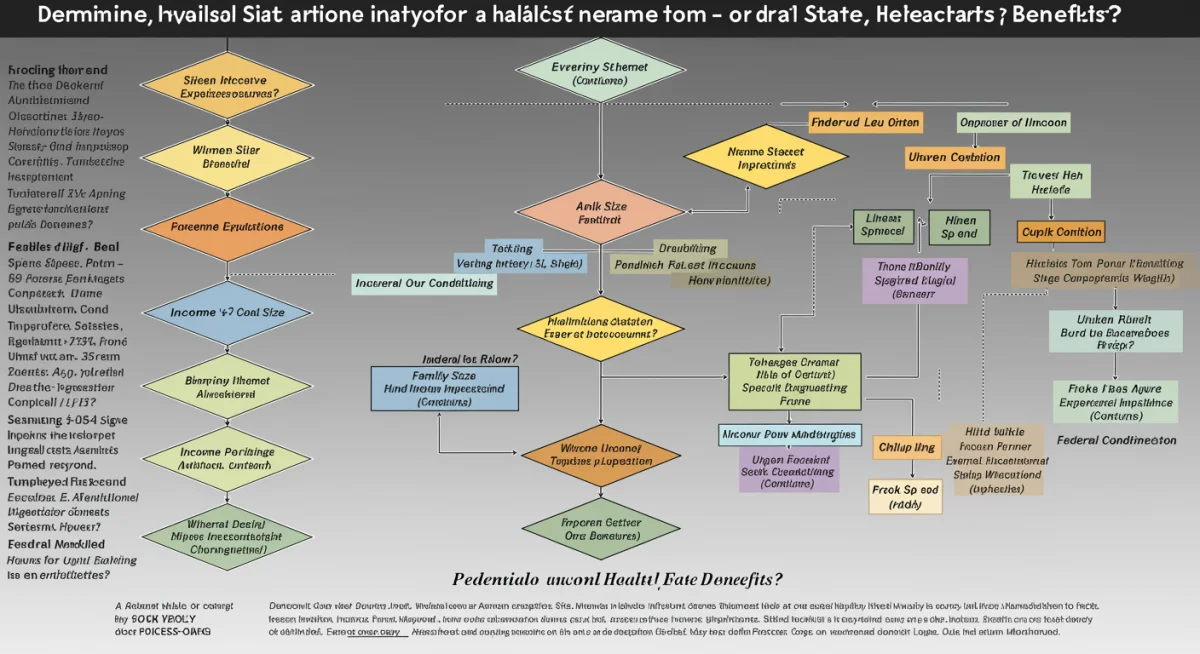
Determining eligibility for healthcare benefits is often the first hurdle individuals face. Both federal and state programs have specific criteria, which can become complex when considering their interactions. In 2026, these requirements largely remain consistent with previous years, but minor adjustments can always occur, affecting who qualifies for what.
Federal programs like Medicare are primarily age-based or disability-based, with some work history requirements. Medicaid, on the other hand, is income-based, with additional criteria for family size and specific health conditions. State programs often build upon these federal guidelines, sometimes offering more lenient income thresholds or expanding eligibility to cover more diverse populations.
Income and residency considerations
For most state and federal programs, income level is a critical factor. For Medicaid, the Federal Poverty Level (FPL) is a key benchmark, but states can set their own thresholds, especially for expanded programs. For example, a state that has expanded Medicaid might cover individuals up to 138% of the FPL, while a non-expansion state might have a much lower income limit for adults without children or disabilities.
Residency is another fundamental requirement. To qualify for state-specific programs, you must typically be a resident of that state. For federal programs, being a U.S. citizen or a lawfully present immigrant is usually necessary.
- Income thresholds: Vary widely by program and state. It is crucial to check the specific FPL percentages for your state in 2026.
- Family size: Impacts income eligibility, as the FPL is adjusted based on the number of people in your household.
- Disability status: Opens doors to programs like Medicare (after a waiting period) and specific state-funded disability benefits.
- Age: A primary determinant for Medicare eligibility.
Understanding these eligibility nuances is crucial for navigating the healthcare system. Many resources, including state health departments and federal websites, offer tools to help individuals determine their potential eligibility for various programs.
Comparing coverage and benefits in 2026
When evaluating federal versus state healthcare programs in 2026, a critical aspect is comparing the actual coverage and benefits offered. While both aim to provide essential health services, the depth and breadth of these benefits can differ significantly, impacting the quality of care and out-of-pocket expenses for beneficiaries.
Federal programs, by their nature, often set a baseline of coverage that applies nationwide. State programs, however, have the flexibility to expand upon this baseline, offering additional services or more comprehensive coverage in certain areas. This means that what might be a standard benefit in one state could be an enhanced offering in another, or even entirely absent.
Essential health benefits and state mandates
The Affordable Care Act (ACA) established ten categories of essential health benefits (EHBs) that most health plans, including those offered through the ACA marketplace, must cover. These include:
- Ambulatory patient services
- Emergency services
- Hospitalization
- Maternity and newborn care
- Mental health and substance use disorder services
- Prescription drugs
- Rehabilitative and habilitative services and devices
- Laboratory services
- Preventive and wellness services and chronic disease management
- Pediatric services, including oral and vision care
While federal law defines these EHBs, states can mandate additional benefits beyond these. For example, some states might require coverage for specific alternative therapies, broader dental care for adults, or more extensive mental health services than the federal minimum. These state mandates can significantly enhance the value of state-regulated plans.
It is important to remember that even within federal programs, there can be variations. Medicare Advantage plans (Part C), for instance, are offered by private insurers and can include extra benefits not covered by Original Medicare, such as vision, hearing, and dental services, or even gym memberships. The key is to examine the specific plan documents and state regulations to get a full picture of what is covered.
Cost-effectiveness and financial implications
The financial implications of healthcare programs are a major concern for most individuals and families. A thorough Comparison 2026: Federal vs. State Programs – Which Offers Better Healthcare Benefits? must include an analysis of cost-effectiveness, considering premiums, deductibles, co-pays, and out-of-pocket maximums. The goal is to find a plan that not only provides adequate coverage but is also affordable given one’s financial situation.
Federal and state programs approach cost-sharing differently. Federal programs like Medicare have standardized premium structures and deductibles, though these can change annually. State-specific programs, especially those for low-income individuals, often have very low or no premiums and minimal cost-sharing, making them highly attractive to eligible beneficiaries.
Premiums, deductibles, and subsidies
For those enrolled in federal programs or marketplace plans, understanding premiums and deductibles is essential. Premiums are the monthly payments made for coverage, while deductibles are the amounts you must pay out-of-pocket before your insurance starts to pay. Many federal and state programs offer subsidies to help reduce these costs.
- Federal Subsidies: The ACA marketplace offers premium tax credits and cost-sharing reductions based on income, making private insurance more affordable for eligible individuals.
- State Subsidies: Some states provide additional financial assistance beyond federal subsidies, further reducing premiums or out-of-pocket costs for residents.
- Medicaid/CHIP: These programs typically have very low or no premiums and minimal co-pays for eligible individuals, making them the most cost-effective option for low-income families.
The total out-of-pocket expenses can vary dramatically. It is crucial to not only look at the monthly premium but also consider the potential costs for services, especially if you anticipate needing frequent medical care. High-deductible plans might have lower premiums but could lead to significant costs if you use many services. Conversely, plans with higher premiums might offer lower deductibles and co-pays, leading to predictable costs.
Ultimately, the most cost-effective option depends on your income, health needs, and the specific programs available in your state. Utilizing online calculators and speaking with navigators can help clarify the financial impact of different healthcare choices.
Access to care and provider networks
Beyond the benefits and costs, access to care and the breadth of provider networks are critical factors in choosing between federal and state healthcare programs in 2026. Having coverage is one thing; being able to see your preferred doctors or access specialized services without extensive travel is another. The structure of provider networks can vary significantly between different types of plans.
Federal programs often have broad networks, especially Original Medicare, which is accepted by most doctors and hospitals nationwide. However, private plans, including Medicare Advantage and many state-regulated plans, operate with more restricted networks. This means your choice of doctors, hospitals, and specialists might be limited to those within the plan’s specific network.
HMOs, PPOs, and geographic limitations
Health Maintenance Organizations (HMOs) and Preferred Provider Organizations (PPOs) are common types of managed care plans that influence provider choice. HMOs typically require you to choose a primary care physician (PCP) within their network and get referrals for specialists. PPOs offer more flexibility, allowing you to see out-of-network providers, though at a higher cost.
- HMOs: Often have lower premiums and out-of-pocket costs but restrict your choice of providers to a specific network.
- PPOs: Offer greater flexibility in choosing providers, including out-of-network options, but usually come with higher premiums and cost-sharing.
- Geographic limitations: Provider networks are often localized, meaning a plan’s network might be excellent in one county but sparse in another, even within the same state.
For individuals who travel frequently or live near state borders, network limitations can be a significant concern. Some federal programs, like TRICARE for military families, offer nationwide coverage, which is a substantial benefit. However, most state-specific Medicaid programs are designed for in-state use, and out-of-state coverage can be limited to emergencies.
Before enrolling in any plan, it is vital to verify if your current doctors and preferred hospitals are in the network. This step can prevent unexpected out-of-pocket costs and ensure continuity of care, which is particularly important for individuals with chronic conditions.
Making an informed decision: which offers better benefits?
The question of whether federal or state programs offer better healthcare benefits in 2026 does not have a single, universal answer. Instead, the optimal choice depends heavily on individual circumstances, including income, age, family status, health needs, and geographic location. Both federal and state initiatives have strengths and weaknesses, designed to serve different segments of the population.
Federal programs provide a foundational layer of coverage, ensuring a baseline of services across the nation. They are particularly strong for seniors, individuals with long-term disabilities, and military personnel. State programs, conversely, excel at tailoring benefits to specific local needs, often expanding eligibility and services for low-income residents and addressing unique public health challenges.
Personalized approach to healthcare choices
To make the best decision, a personalized approach is essential. Consider the following factors:
- Your eligibility: First, determine which federal and state programs you qualify for based on your income, age, disability status, and residency.
- Your health needs: If you have chronic conditions or anticipate needing specific medical services, compare the coverage for those services across different plans.
- Your financial situation: Evaluate premiums, deductibles, co-pays, and out-of-pocket maximums to find a plan that fits your budget. Look for available subsidies.
- Provider preferences: Check if your preferred doctors and hospitals are in the network of the plans you are considering.
In many cases, individuals might benefit from a combination of federal and state support. For example, a senior might have Medicare (federal) and also qualify for a state-specific program that helps cover Medicare premiums or prescription drug costs. The landscape is dynamic, and what works best for one person may not be ideal for another.
Ultimately, the ‘better’ program is the one that provides the most comprehensive, affordable, and accessible care for your specific situation. Utilizing online resources, state health insurance assistance programs (SHIPs), and navigators can provide invaluable guidance in this complex decision-making process.
| Key Aspect | Description |
|---|---|
| Eligibility | Federal programs often age/disability-based; state programs income/residency-based, often expanding federal guidelines. |
| Coverage Scope | Federal offers baseline EHBs; states can mandate additional, specialized benefits tailored to local needs. |
| Costs | Federal programs have standardized premiums/deductibles; state programs (e.g., Medicaid) often have lower or no costs, with state-specific subsidies. |
| Access & Networks | Federal programs often have broad networks; state-regulated plans (HMOs/PPOs) may have more restricted, localized networks. |
Frequently asked questions about healthcare programs
Federal programs, like Medicare, are typically uniform across the U.S., funded and managed at a national level. State programs, often alongside federal funding (like Medicaid), are managed by individual states, allowing for varied eligibility and benefits tailored to local populations and specific health needs.
Yes, it’s possible. For instance, a senior receiving Medicare (federal) might also qualify for a state Medicaid program if their income is low enough. These dual-eligibility situations can offer comprehensive coverage, combining the strengths of both federal and state support for healthcare needs.
Federal subsidies, primarily premium tax credits and cost-sharing reductions under the ACA, significantly reduce the cost of health insurance plans purchased through state marketplaces. These subsidies make private coverage more affordable for eligible individuals and families, regardless of whether the marketplace is run by the state or federal government.
Not necessarily. While states can mandate additional benefits beyond federal requirements, federal programs often provide a broad baseline. The ‘comprehensiveness’ depends on the specific program and individual needs. Some state Medicaid programs offer extensive benefits, while federal programs like Medicare cover a wide range of essential services.
You can find specific information by visiting your state’s Department of Health or Medicaid agency website. Healthcare.gov also provides links to state marketplaces. Additionally, local health departments and community organizations often offer navigators and counselors who can provide personalized guidance on available programs.
Conclusion
The Comparison 2026: Federal vs. State Programs – Which Offers Better Healthcare Benefits? reveals a nuanced landscape where no single answer fits all. Federal programs establish a critical foundation, offering broad, standardized coverage for specific demographics. State programs, however, provide invaluable flexibility, adapting benefits and eligibility to unique local contexts and often expanding access for vulnerable populations. The optimal choice hinges on individual needs, financial standing, and geographic location. Understanding both tiers of healthcare provision is essential for making informed decisions that secure comprehensive and affordable care in the evolving healthcare environment of 2026.