Federal Disaster Aid 2026: Access Immediate & Long-Term Funds
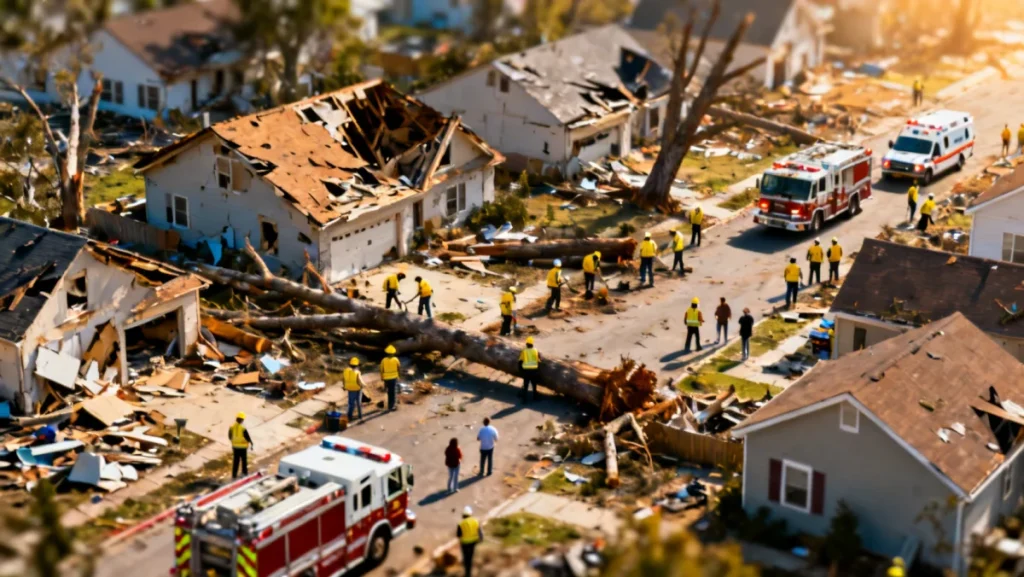
Securing federal disaster assistance in 2026 involves understanding various programs designed to provide immediate aid and crucial long-term recovery funds, with an average household potentially receiving $5,000 to rebuild their lives and communities effectively.
When disaster strikes, the path to recovery can feel overwhelming. Fortunately,
federal disaster assistance programs are designed to provide a critical lifeline,
offering both immediate relief and essential long-term recovery funds. For 2026,
understanding how to navigate these resources is key to rebuilding effectively,
with households potentially accessing an average of $5,000 to help with the aftermath.
understanding federal disaster assistance in 2026
Federal disaster assistance encompasses a broad range of programs and services
provided by the U.S. government to support individuals, families, and communities
affected by presidentially declared major disasters. These declarations trigger
aid that can help cover everything from emergency housing to permanent home repairs.
In 2026, these programs continue to evolve, with an increased focus on streamlined
applications and more equitable distribution of funds. The goal remains consistent:
to help those impacted return to a semblance of normalcy as quickly and efficiently
as possible. Knowing the types of assistance available is the first step toward recovery.
types of federal aid available
The assistance provided is not a one-size-fits-all solution but rather a comprehensive
suite of options tailored to specific needs. These can range from direct financial
grants to temporary housing and low-interest loans. Each program has specific criteria
and application processes that individuals must follow.
- Individual assistance: Direct financial or direct service aid to individuals and households.
- Public assistance: Funds for state, tribal, and local governments, and certain private nonprofit organizations for emergency work and repair or replacement of disaster-damaged facilities.
- Hazard mitigation assistance: Funding for measures to reduce future losses to homes and businesses from natural disasters.
Understanding the distinctions between these categories is vital for applicants.
For example, individual assistance might cover immediate needs like food and shelter,
while public assistance helps repair roads and public buildings. Hazard mitigation focuses
on preventing future damage, a crucial aspect of long-term resilience.
The assistance landscape is complex, yet designed to be accessible. By familiarizing
themselves with the fundamental structure of federal disaster aid, affected
individuals can better position themselves to receive the support they desperately need.
eligibility criteria for disaster relief funds
Navigating the eligibility requirements for federal disaster assistance can seem daunting,
but it’s a crucial step in accessing much-needed funds. Generally, aid is available
only after a presidential disaster declaration for a specific event and geographic area.
Applicants must typically be U.S. citizens, non-citizen nationals, or qualified aliens.
The damaged property must be their primary residence, and they must have incurred
losses not covered by insurance or other forms of assistance. Each program has
its unique set of criteria, so careful review is essential.
who qualifies for individual assistance?
Individual Assistance is primarily offered through the Federal Emergency Management Agency (FEMA).
To qualify, individuals must demonstrate that their losses are a direct result of the declared disaster.
This often involves proving residency, ownership, and the extent of the damage.
- Primary residence: The damaged home must be where you lived most of the time.
- Insurance status: You must not have adequate insurance coverage for the losses.
- Disaster-related damage: The losses must be directly caused by the declared disaster event.
FEMA’s individual and households program (IHP) provides financial assistance and direct services
to people who have uninsured or underinsured necessary expenses and serious needs caused by a
federally declared disaster. This can include funds for housing, essential household items,
and even medical or funeral expenses directly related to the disaster.
It is important to note that while the average household may receive around $5,000, this figure
can vary greatly depending on the extent of damage, individual needs, and the specific programs
they qualify for. The goal is to provide sufficient support to begin the recovery process.
the application process: step-by-step guide
Applying for federal disaster assistance requires attention to detail and timely action.
The process typically begins with registering with FEMA, which can be done online, by phone,
or in person at a disaster recovery center.
Once registered, applicants may be required to provide documentation, such as proof of identity,
residency, ownership, and insurance information. A FEMA inspector may also visit the property
to assess damages. This step is critical for determining the type and amount of aid you might receive.
registering with FEMA
The first and most critical step is to register with FEMA. This creates your official record
and initiates the assessment process. Failure to register within the specified timeframe
(usually 60 days from the disaster declaration) can result in a loss of eligibility.
- Online: Visit DisasterAssistance.gov to register quickly and securely.
- Phone: Call the FEMA toll-free helpline at 1-800-621-FEMA (3362).
- In person: Locate a nearby Disaster Recovery Center (DRC) for direct assistance.
After registration, you will receive a nine-digit registration number. Keep this number safe,
as it will be essential for all future communications and inquiries regarding your application.
It’s your key to tracking your aid status and receiving updates.
The application process, while structured, can be complex. Seeking assistance from disaster
recovery specialists or local community organizations can significantly simplify the journey
and help ensure all necessary documentation is submitted correctly and on time.

immediate aid vs. long-term recovery funds
Federal disaster assistance is structured to address both immediate, urgent needs
and the more extensive, sustained requirements of long-term recovery. Understanding
this distinction helps individuals plan their rebuilding efforts more effectively.
Immediate aid typically focuses on providing funds for temporary housing, essential
repairs to make a home safe, sanitary, and functional, and assistance for disaster-related
medical or funeral expenses. These funds are crucial in the days and weeks following a disaster.
sources of immediate relief
Immediate relief often comes directly from FEMA’s Individual and Households Program (IHP).
This program can provide financial assistance for temporary lodging, home repairs,
and replacement of essential personal property.
- Temporary housing assistance: Funds to rent alternative housing or direct temporary housing units.
- Home repair assistance: Grants to homeowners to repair disaster-damaged primary residences.
- Other needs assistance: Funds for necessary expenses and serious needs not covered by insurance.
Long-term recovery, on the other hand, involves more substantial and often more complex
support. This can include Small Business Administration (SBA) disaster loans for homeowners
and businesses, community block grants for disaster recovery (CDBG-DR), and various
hazard mitigation programs aimed at rebuilding stronger and safer.
These long-term funds are vital for communities to reconstruct infrastructure,
for businesses to reopen, and for families to rebuild homes that may have been
completely destroyed. The scale and scope of these programs reflect the commitment
to comprehensive recovery.
maximizing your disaster assistance: tips for 2026
To effectively utilize federal disaster assistance in 2026, a proactive and organized
approach is essential. Maximizing your potential aid involves meticulous documentation,
understanding program nuances, and persistent follow-up.
Begin by documenting everything. Take photos and videos of damage before and after
any cleanup. Keep a detailed log of all expenses related to the disaster, including
receipts for temporary housing, repairs, and replacement items. This evidence is
invaluable during the application and appeal processes.
key strategies for successful claims
Understanding the specific requirements of each program is critical. While FEMA
provides direct aid, the Small Business Administration (SBA) offers low-interest
disaster loans that can cover losses not fully compensated by insurance or other grants.
Even if you don’t own a business, homeowners and renters can apply for these loans for personal property and real estate losses.
- Document everything: Photos, videos, receipts, and communication logs.
- Understand all available programs: Research beyond FEMA for SBA loans and other grants.
- Appeal denials: If initially denied, understand the reason and provide additional documentation.
Do not hesitate to appeal a decision if your initial application is denied. Often,
denials are due to missing information or misunderstandings. Providing additional
documentation or clarification can reverse an unfavorable decision. Many resources
are available to help with the appeals process, including legal aid services.
Finally, stay informed about local and state resources. These can complement federal aid
and provide additional layers of support, from volunteer cleanup efforts to mental health services.
A holistic approach to recovery involves leveraging all available avenues of assistance.
common challenges and how to overcome them
While federal disaster assistance is a vital resource, applicants often face challenges
that can delay or complicate their recovery. Being aware of these common hurdles
can help you prepare and overcome them more effectively.
One frequent issue is incomplete or incorrect documentation. The sheer stress of a
disaster can make it difficult to gather and organize necessary paperwork. Another
challenge is understanding the distinctions between various aid programs and knowing
which ones apply to your specific situation.
navigating bureaucratic hurdles
The bureaucratic process itself can be a significant obstacle. Multiple agencies,
different forms, and varying eligibility criteria can be confusing. Patience and
persistence are key when interacting with different government entities.
- Documentation issues: Keep all records meticulously organized from day one.
- Understanding program overlap: Seek guidance to determine which programs best suit your needs.
- Communication delays: Be prepared for potential delays and follow up regularly.
To mitigate these challenges, leverage available support systems. Disaster recovery
centers (DRCs) are staffed with representatives from various agencies who can provide
personalized guidance. Non-profit organizations also play a crucial role, offering
assistance with paperwork, legal advice, and emotional support.
Furthermore, understanding that federal aid is not intended to make you whole
but rather to kickstart your recovery is important. It is designed to cover
essential needs and provide a foundation upon which you can rebuild. Managing
expectations can help reduce frustration during the process.
looking ahead: disaster preparedness for 2026 and beyond
Beyond accessing immediate and long-term recovery funds, a crucial aspect of
disaster management in 2026 is preparedness. Proactive measures can significantly
reduce the impact of future disasters and streamline the process of receiving
federal disaster assistance when needed.
This includes creating a family emergency plan, assembling a disaster kit, and
securing adequate insurance coverage. Being prepared means you can focus more
on recovery and less on immediate survival after an event.
building resilience in your community
Community-level preparedness initiatives are also vital. These can include
investments in resilient infrastructure, early warning systems, and community
education programs. Federal hazard mitigation grants often support these efforts,
aiming to reduce the overall risk and cost of future disasters.
- Emergency planning: Develop a family plan with evacuation routes and meeting points.
- Disaster kit: Assemble essentials like water, food, first aid, and important documents.
- Insurance review: Ensure your home and property insurance adequately cover potential disaster risks.
For 2026, there’s an increasing emphasis on integrating climate resilience into
disaster preparedness strategies. This means considering the long-term impacts
of climate change on disaster frequency and intensity when planning for the future.
Ultimately, while federal assistance provides critical support after a disaster,
the most effective strategy is a combination of robust preparedness and informed
action during and after an event. Empowering individuals and communities with
knowledge and resources is the best defense against unforeseen calamities.
| Key Aspect | Brief Description |
|---|---|
| Eligibility | Requires a presidential disaster declaration; applicants must be U.S. citizens/qualified aliens, primary residence damaged, and uninsured losses. |
| Application Process | Register with FEMA (online, phone, in-person), provide documentation, and expect a property inspection. |
| Types of Aid | Includes Individual Assistance (FEMA), Public Assistance, and Hazard Mitigation Assistance for various needs. |
| Maximizing Aid | Document all damage and expenses thoroughly, understand all available programs (FEMA, SBA), and appeal denials. |
frequently asked questions about disaster assistance
The first step is to register with FEMA, either online at DisasterAssistance.gov, by calling 1-800-621-FEMA (3362), or by visiting a Disaster Recovery Center. This initiates your application and creates a record of your needs.
The timeline for receiving funds varies based on the program and individual circumstances. Immediate aid for essential needs can be processed relatively quickly, while more complex long-term recovery funds may take longer due to assessment and approval processes.
Yes, but generally federal assistance covers uninsured or underinsured losses. You must first file a claim with your insurance company. Federal aid can then help cover expenses that your insurance does not, or fill gaps in coverage.
You will need proof of identity, residency, property ownership, and insurance information. It’s also crucial to have detailed documentation of all damages, including photos, videos, and receipts for any disaster-related expenses.
If your application is denied, you have the right to appeal. Review the denial letter carefully to understand the reason, gather additional documentation or clarification, and submit your appeal within the specified timeframe, usually 60 days.
conclusion
Navigating the aftermath of a disaster is an immense challenge, but the availability of
federal disaster assistance provides a crucial pathway to recovery. By understanding
the various programs, diligently following the application process, and proactively
documenting losses, individuals and communities can effectively access the immediate
aid and long-term funds necessary to rebuild. While the average $5,000 per household
represents a significant starting point, comprehensive recovery demands persistent
engagement with all available resources and a strong commitment to preparedness for
the future. Empowering yourself with this knowledge is the most powerful tool in the face of adversity.