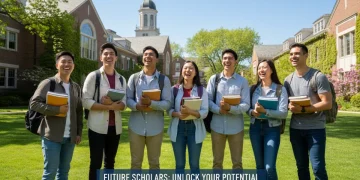
Decoding Scholarship Offers: 2026 US Awards Insights

Understanding 2026 US scholarship offers involves recognizing shifts in funding priorities, increased digital accessibility, and a greater emphasis on holistic applicant profiles.
As the academic landscape continuously evolves, future students and their families are keenly focused on understanding the intricacies of higher education funding. Decoding Scholarship Offers: What to Expect from 2026 Awards in the United States is more crucial than ever, as the pathway to a college degree often hinges on securing adequate financial support. This guide aims to illuminate the trends, criteria, and strategies that will define scholarship opportunities for the 2026 academic year.
The evolving landscape of 2026 scholarship opportunities
The realm of scholarships is dynamic, influenced by economic shifts, technological advancements, and societal priorities. For 2026, we anticipate several key changes that will shape how awards are distributed and what students need to do to secure them. Understanding these broader trends is the first step in positioning yourself for success.
Increased emphasis on STEM and vocational skills
As the job market continues its rapid evolution, there’s a growing demand for specialized skills. This translates directly into scholarship funding. Universities, corporations, and private foundations are likely to channel more resources into fields deemed critical for future economic growth.
- Science, Technology, Engineering, and Mathematics (STEM): Expect more scholarships targeting students pursuing degrees in areas like artificial intelligence, cybersecurity, renewable energy, and biotechnology.
- Healthcare Professions: With ongoing healthcare demands, awards for nursing, allied health, and medical research will remain robust.
- Skilled Trades: There’s a renewed appreciation for vocational skills, potentially leading to increased scholarships for students entering trades like advanced manufacturing, automotive technology, and construction.
Beyond specific fields, the overall competitive nature of scholarships is expected to intensify. With rising tuition costs, more students will be vying for limited funds, necessitating a more strategic and proactive approach to applications. The criteria for these awards will likely expand beyond traditional academic merit to include a broader range of attributes.
Navigating eligibility criteria and application processes
Securing a scholarship in 2026 will require a thorough understanding of eligibility requirements and a meticulous approach to the application process. These elements are becoming increasingly nuanced, moving beyond simple GPA thresholds to a more holistic evaluation of applicants.
Beyond academics: holistic reviews gain prominence
While academic excellence remains foundational, scholarship committees are increasingly looking at the complete picture of an applicant. This means your extracurricular activities, leadership roles, community service, and personal essays will carry significant weight. They want to understand your potential impact and how you align with the scholarship’s mission.
The application process itself is also undergoing a transformation. Many scholarships are moving towards fully digital submissions, often incorporating video essays or portfolio requirements. Familiarity with these platforms and presentation formats will be crucial. Timelines are also critical; missing a deadline, even by a minute, can mean forfeiting an opportunity. Create a detailed calendar and set multiple reminders for each application.
Furthermore, demonstrating a clear connection between your aspirations and the scholarship’s objectives is vital. Generic applications are less likely to succeed. Tailor each essay and recommendation to highlight how your unique experiences and future goals resonate with what the scholarship aims to achieve. This personalized approach can set you apart in a competitive pool.
Understanding financial aid packages and award types
Scholarship offers in 2026 will come in various forms, each with its own benefits and stipulations. It’s essential to understand the different types of awards and how they integrate into your overall financial aid package to make informed decisions about your higher education funding.
Merit-based vs. need-based scholarships
The fundamental distinction often lies between merit-based and need-based awards. Merit scholarships are granted based on a student’s achievements, which can include academic performance, artistic talent, athletic prowess, or leadership abilities. These typically do not consider your family’s financial situation. Need-based scholarships, conversely, are awarded based on a student’s demonstrated financial need, as determined by information provided in the Free Application for Federal Student Aid (FAFSA) or institutional aid forms.
Beyond these primary categories, you’ll encounter a spectrum of specialized scholarships. These might be geared towards specific demographics, fields of study, or unique circumstances. For example, there could be awards for students from particular geographic regions, first-generation college students, or those overcoming significant personal challenges. Understanding these distinctions helps in targeting the most appropriate opportunities for your profile.
It is also important to consider how scholarships interact with other forms of financial aid, such as grants, loans, and work-study programs. A comprehensive financial aid package might include a combination of these, and understanding the total picture is crucial. Some scholarships may reduce your eligibility for other need-based aid, so always clarify the terms and conditions of each offer. Negotiating financial aid packages, though not always possible, can sometimes yield better outcomes, especially if you have competing offers from different institutions.
The impact of technology and digital platforms on scholarship searches
The digital age has revolutionized how students search for and apply to scholarships. In 2026, technology will continue to play an even more significant role, offering unprecedented access to opportunities but also requiring savvy navigation skills from applicants.
Leveraging online databases and AI matching tools
Dedicated scholarship search engines and platforms will be your primary allies. These online databases compile thousands of scholarships from various sources, allowing you to filter by criteria such as major, GPA, ethnicity, location, and even unique interests. Many platforms now incorporate AI-driven matching algorithms that can suggest scholarships based on your profile, saving you considerable time and effort.

Beyond general search engines, consider specialized platforms that cater to specific demographics or academic fields. For instance, there are sites dedicated solely to STEM scholarships, or awards for minority students. Social media groups and forums can also be valuable resources, providing real-time updates on new opportunities and offering a community for sharing tips and advice. However, always verify the legitimacy of any scholarship found through less official channels.
The digital application process often involves uploading documents, writing online essays, and sometimes even participating in virtual interviews. Ensuring your digital presence is professional and that you are proficient with various online tools will be key. Your online profile, including any social media, should reflect positively on your candidacy, as committees may conduct background checks. A strong digital footprint, both in terms of your application and your online persona, can significantly enhance your chances.
Preparing a compelling application for 2026 awards
With increased competition and evolving criteria, a compelling application is paramount. This goes beyond simply meeting the minimum requirements; it involves crafting a narrative that showcases your unique strengths, passions, and potential impact.
Crafting powerful essays and securing strong recommendations
Your personal essay is often where you can truly distinguish yourself. It’s an opportunity to tell your story, articulate your aspirations, and demonstrate how you embody the values of the scholarship. Avoid clichés and generic statements; instead, focus on specific anecdotes and reflections that reveal your character and resilience. Start drafting your essays early, allow ample time for revisions, and seek feedback from trusted mentors or teachers.
Strong letters of recommendation are equally critical. Choose recommenders who know you well and can speak to your academic abilities, personal qualities, and leadership potential. Provide them with all necessary information, including your resume, essay drafts, and the scholarship’s requirements, well in advance of the deadline. A well-written recommendation can significantly boost your application by providing external validation of your strengths.
Furthermore, ensure all parts of your application are consistent and coherent. Your resume, transcripts, essays, and recommendations should collectively paint a clear and positive picture of who you are and what you aim to achieve. Proofread everything meticulously to avoid any errors that could detract from your professionalism. A polished, thoughtful application demonstrates your commitment and attention to detail, which are highly valued by scholarship committees.
Long-term strategies for scholarship success
Securing scholarships isn’t just about a single application cycle; it’s often a cumulative effort that begins long before you even start thinking about college. Developing long-term strategies can significantly increase your chances of receiving substantial financial aid for your higher education journey.
Building a strong academic and extracurricular profile early
The foundation for scholarship success is laid throughout your high school years. Maintaining a strong academic record is crucial, as many scholarships have GPA requirements. However, it’s not just about grades. Engaging in meaningful extracurricular activities, taking on leadership roles, and demonstrating a commitment to community service can distinguish you from other applicants. These experiences illustrate your passions, initiative, and ability to contribute positively to a community.
Consider pursuing advanced placement (AP) or international baccalaureate (IB) courses, as these demonstrate academic rigor and can sometimes earn you college credit, further reducing costs. Participating in academic competitions, research projects, or internships related to your intended field of study can also strengthen your profile. These activities not only enhance your resume but also provide valuable experiences that can be discussed in essays and interviews.
Networking and mentorship also play a vital role. Connecting with teachers, counselors, and professionals in your field of interest can open doors to unique opportunities and provide guidance. They might be aware of niche scholarships or programs that align perfectly with your profile. Building these relationships early can provide a significant advantage when seeking recommendations and advice, ultimately contributing to a more robust and competitive scholarship application portfolio.
| Key Aspect | 2026 Scholarship Outlook |
|---|---|
| Funding Focus | Increased emphasis on STEM, healthcare, and vocational skills. |
| Applicant Review | Shift towards holistic evaluations, valuing extracurriculars and essays. |
| Digital Tools | Greater reliance on online databases and AI matching for efficient searching. |
| Preparation | Early profile building and tailored applications are key for success. |
Frequently asked questions about 2026 scholarships
For 2026, expect a stronger emphasis on STEM fields, healthcare, and vocational skills due to evolving job market demands. Additionally, scholarship committees will likely focus more on holistic applicant profiles, considering leadership, community service, and personal narratives alongside academic achievements.
Digital platforms and AI matching tools are becoming indispensable. Utilize online scholarship databases that offer advanced filtering and personalized recommendations based on your academic profile and interests. Social media groups and university financial aid websites will also be crucial for discovering new awards.
Yes, financial need remains a significant factor for many scholarships, especially those offered by federal and state governments, as well as some private foundations. However, merit-based scholarships, awarded for achievements regardless of financial situation, are also abundant. It’s wise to apply for both types if eligible.
A standout application in 2026 will feature a compelling personal essay that tells a unique story, strong letters of recommendation from mentors who know you well, and a demonstrated commitment to extracurricular activities and community involvement. Tailoring each application to the specific scholarship’s mission is also key.
Ideally, preparation for 2026 scholarship applications should begin early in your high school career. Building a strong academic record, engaging in meaningful extracurriculars, and developing leadership skills over several years will create a more competitive profile when it’s time to apply.
Conclusion
The landscape of 2026 scholarship offers in the United States presents both challenges and unparalleled opportunities for prospective students. By understanding the evolving criteria, leveraging digital resources, and meticulously preparing compelling applications, students can significantly enhance their chances of securing the financial aid needed to pursue their educational aspirations. Proactive planning, a focus on holistic development, and a strategic approach to the application process will be the cornerstones of scholarship success in the coming years, empowering a new generation to achieve their academic dreams without undue financial burden.