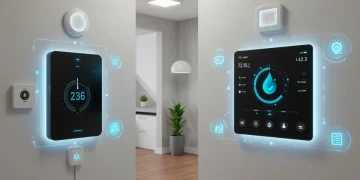
Smart Appliances: Save $300 Annually on Utilities by 2025
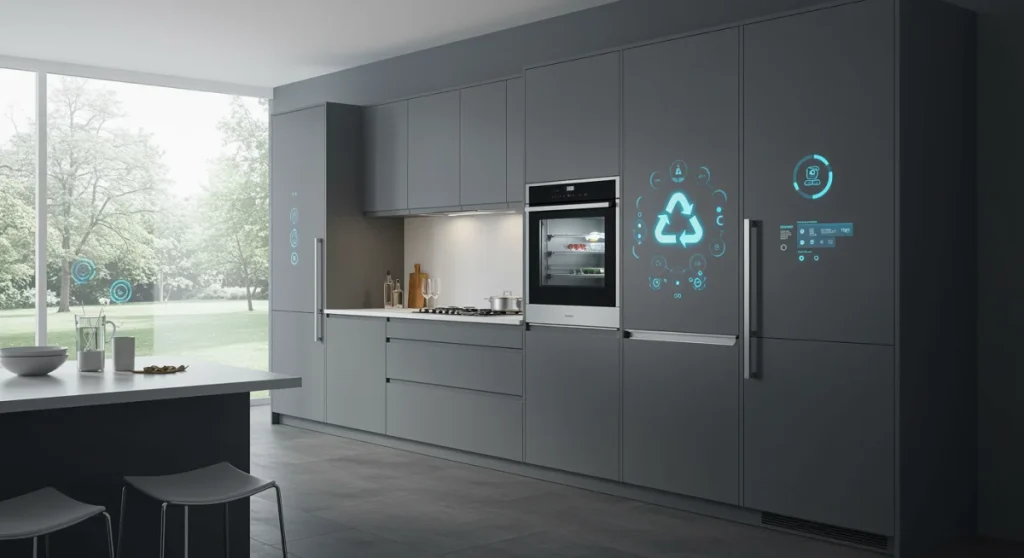
New smart appliance models arriving in 2025 promise significant utility savings, potentially up to $300 annually, by integrating advanced energy management and intelligent operation into everyday household tasks, thereby reducing household expenses.
The promise of a smarter home isn’t just about convenience; it’s increasingly about tangible financial benefits. With new models emerging, smart appliance savings are becoming a significant factor for homeowners looking to reduce their utility bills. Imagine cutting down your annual energy costs by hundreds of dollars, all while enjoying enhanced functionality and a more connected living space. This isn’t a distant dream but a very real possibility for 2025 and beyond.
The evolving landscape of smart home technology
The smart home ecosystem has grown exponentially, moving beyond simple automation to sophisticated energy management. Appliances are no longer isolated units but part of an interconnected network designed to optimize performance and reduce waste. This evolution is driven by consumer demand for efficiency and sustainability, coupled with technological advancements.
Early smart devices offered basic remote control, but the latest innovations integrate artificial intelligence and machine learning to learn user habits and adapt accordingly. This proactive approach to energy consumption is what differentiates the new wave of smart appliances, making them truly impactful on your wallet.
From convenience to cost-cutting
- Automated Scheduling: Appliances can run during off-peak hours, leveraging lower electricity rates.
- Predictive Maintenance: Sensors detect potential issues before they lead to costly breakdowns or inefficient operation.
- Optimized Resource Usage: Smart features ensure water, electricity, and gas are used only when necessary and in optimal amounts.
The shift from mere convenience to significant cost-cutting is a game-changer for many households. These new models are designed with the primary goal of making your home more efficient, translating directly into lower utility bills. Understanding how these technologies work is the first step toward maximizing your savings.
In essence, the smart home of 2025 is not just about cool gadgets; it’s about a holistic approach to home management that prioritizes efficiency, sustainability, and financial prudence. The integration of advanced sensors, AI algorithms, and seamless connectivity creates an environment where energy waste is minimized, and savings are maximized.
Unpacking the $300 annual savings potential
The figure of saving up to $300 annually on utilities isn’t an arbitrary number; it’s a conservative estimate based on the combined efficiencies of multiple new smart appliance models. This potential saving comes from various sources, including reduced electricity consumption, optimized water usage, and more intelligent heating and cooling systems. It’s a cumulative effect that can significantly impact your household budget.
Consider a household that upgrades several key appliances: a smart refrigerator, a smart washer/dryer, a smart thermostat, and perhaps a smart water heater. Each of these devices, individually, offers efficiency gains. When combined, their impact multiplies, leading to substantial overall savings.
Key areas contributing to savings
- Refrigeration: Smart refrigerators use advanced sensors to monitor contents and optimize cooling cycles, reducing energy wastage from frequent door openings.
- Laundry: Smart washers and dryers detect load sizes and fabric types, adjusting water and energy use accordingly, often integrating with utility grids to run during off-peak hours.
- Climate Control: Smart thermostats learn your preferences, detect occupancy, and integrate with weather forecasts to maintain optimal temperatures with minimal energy expenditure.
- Dishwashing: Modern smart dishwashers feature soil sensors and advanced wash cycles that dramatically reduce water and energy consumption per load.
These individual improvements stack up. For example, a smart refrigerator might save $30-$50 annually, a smart washer/dryer pair $70-$100, and a smart thermostat $50-$150, depending on usage and climate. The combined effect easily reaches the $300 mark, and for larger homes or those in extreme climates, it could be even higher.
The financial impact extends beyond just utility bills. These appliances often qualify for rebates and incentives, further reducing the initial investment cost. The long-term value proposition of these devices makes them a wise choice for any homeowner looking to invest in their property’s future and their financial well-being.
Smart refrigerators and their energy-saving innovations
Refrigerators are often among the most significant energy consumers in a household, running 24/7. However, the new generation of smart refrigerators is designed to significantly mitigate this energy drain through a series of intelligent innovations. These appliances go far beyond just keeping your food cold; they actively manage their energy consumption.
One of the primary ways new smart refrigerators save energy is through advanced temperature management. Unlike older models that simply maintain a set temperature, smart versions use multiple sensors to monitor internal conditions, external ambient temperatures, and even how often the door is opened. This data allows them to optimize cooling cycles, preventing unnecessary energy expenditure.
Features that cut consumption
- Door-in-Door Design: Reduces cold air loss by providing quick access to frequently used items without opening the main compartment.
- Smart Food Management: Some models can track inventory and suggest recipes, reducing food waste which indirectly saves energy used in food production and transport.
- Vacation Mode: Automatically adjusts to a more energy-efficient setting when you’re away, without completely shutting down.
- Adaptive Defrost: Only defrosts when necessary, rather than on a fixed schedule, saving energy by avoiding unnecessary heating cycles.
The integration of AI also allows these refrigerators to learn user patterns. If you consistently open the door less during certain hours, the refrigerator can adjust its cooling intensity accordingly. Some models can even connect to your home’s smart grid, automatically shifting energy-intensive operations to off-peak hours when electricity rates are lower.
The cumulative effect of these features can lead to a noticeable reduction in your electricity bill. While the initial investment in a smart refrigerator might be higher, the long-term energy savings, coupled with the convenience and reduced food waste, make it a compelling upgrade for any modern home.
Intelligent climate control: the smart thermostat revolution
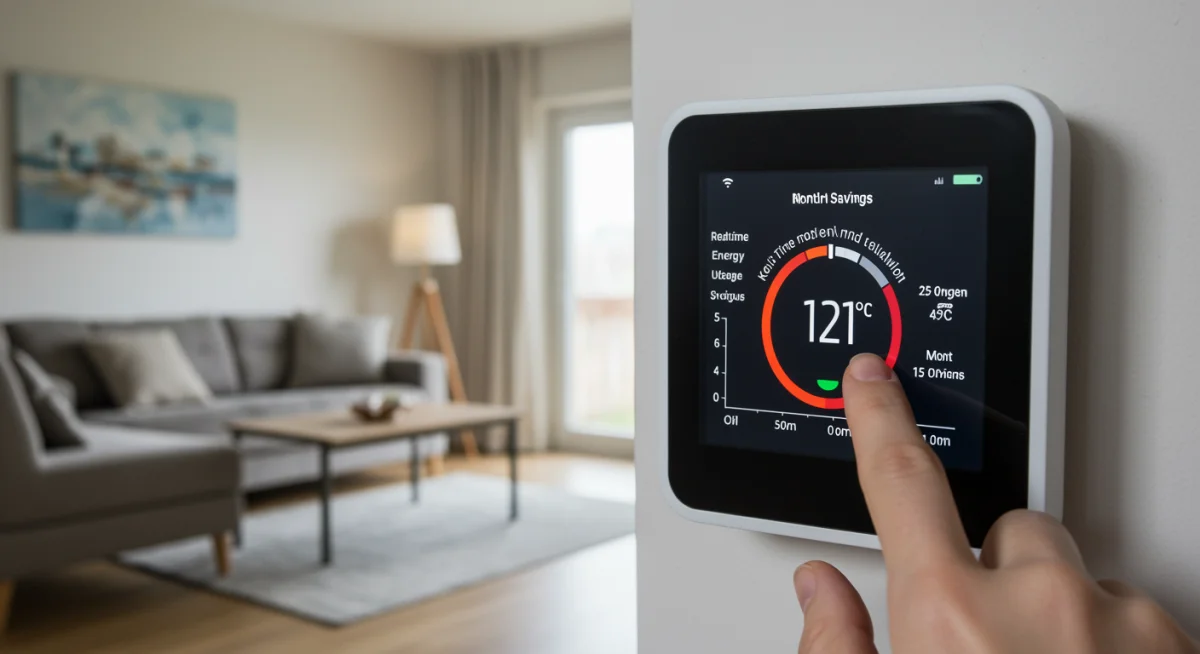
Heating and cooling represent the largest portion of utility bills for most American households. This makes smart thermostats one of the most impactful smart appliances for achieving significant financial savings. The revolution in intelligent climate control centers on their ability to learn, adapt, and optimize your home’s temperature with unprecedented precision.
Beyond simple programmable schedules, modern smart thermostats employ sophisticated algorithms, motion sensors, and even geofencing technology. They understand when you’re home, when you’re away, and what temperatures you prefer at different times of the day, ensuring comfort without wasting energy.
How smart thermostats deliver savings
- Learning Algorithms: They learn your schedule and temperature preferences over time, automatically adjusting settings.
- Occupancy Sensors: Detect if rooms are occupied, preventing heating or cooling of empty spaces.
- Geofencing: Uses your smartphone’s location to know when you’re leaving or approaching home, adjusting the temperature accordingly.
- Weather Integration: Connects to local weather forecasts to pre-heat or pre-cool your home more efficiently.
The ability of these devices to integrate with other smart home systems, such as smart window shades or ceiling fans, further enhances their efficiency. For instance, a smart thermostat could signal smart blinds to close during peak sun hours to reduce heat gain, or activate a smart fan to circulate air more effectively.
Many utility companies also offer incentives or rebates for installing smart thermostats, recognizing their potential to reduce overall grid demand. Some even offer programs where you can voluntarily allow your thermostat to make minor adjustments during peak demand periods in exchange for further bill credits. This makes the return on investment for a smart thermostat relatively quick and highly rewarding.
Smart laundry and dishwashing: water and energy efficiency
Laundry and dishwashing machines are essential household appliances that, when not optimized, can consume significant amounts of water and electricity. New smart models for 2025 are designed with advanced sensors and intelligent programming to drastically improve efficiency, leading to tangible savings on both your water and energy bills.
These appliances use sophisticated technology to precisely determine the resources needed for each cycle. No more guessing load sizes or soil levels; the machines do the work for you, ensuring that not a drop of water or a watt of electricity is wasted.
Innovations in efficiency
- Load Sensing: Smart washing machines automatically detect load size and fabric type, adjusting water levels and wash cycles for optimal cleaning with minimal resource use.
- Soil Sensors: Smart dishwashers use sensors to measure the grime level on dishes, tailoring the wash intensity and duration, thus avoiding unnecessarily long or hot cycles.
- Delayed Start/Off-Peak Scheduling: Both types of appliances can be programmed to run during off-peak utility hours, taking advantage of lower electricity rates.
- Water Recirculation: Some advanced dishwashers filter and reuse water during certain rinse cycles, significantly reducing overall water consumption.
Beyond direct resource savings, smart laundry and dishwashing machines often feature faster cycle times and more effective cleaning, which can extend the life of your garments and dishes. This reduces the need for replacements, adding another layer of long-term financial benefit.
Many models also offer remote diagnostics and maintenance alerts, helping homeowners address minor issues before they escalate into costly repairs or reduce efficiency. The combination of water, energy, and maintenance savings makes these smart appliances a smart investment for any home.
The future of home efficiency: integration and AI
The trajectory for smart home technology points towards deeper integration and more sophisticated artificial intelligence. The goal is to create a seamless, self-optimizing home environment where appliances communicate not only with each other but also with external factors like weather patterns, utility grid conditions, and even your personal calendar. This level of integration promises even greater efficiencies and savings beyond the current $300 annual estimate.
Imagine a home where your smart thermostat knows you’re leaving for a vacation, communicates with your smart water heater to enter a low-power mode, and signals your smart lighting to simulate occupancy. This coordinated effort minimizes energy waste across the board.
Upcoming trends in smart home efficiency
- Predictive Energy Management: AI will analyze historical data and real-time conditions to predict future energy needs and proactively adjust appliance settings.
- Grid Integration: Appliances will more actively participate in demand-response programs, automatically reducing consumption during peak grid stress in exchange for incentives.
- Personalized Efficiency Profiles: Systems will learn individual preferences and habits to create custom efficiency profiles that balance comfort with cost savings.
- Modular and Upgradable Systems: Future smart appliances may feature modular designs, allowing for easier upgrades to software and hardware, extending their lifespan and adaptability.
The role of artificial intelligence will evolve from reactive adjustments to proactive, predictive management. AI-powered systems will learn not just your habits, but also the nuances of your home’s thermal envelope, local microclimate, and even the wear patterns of your appliances. This deep understanding will enable unparalleled optimization.
Ultimately, the future of home efficiency is one where the home itself becomes an intelligent entity, constantly working to reduce its environmental footprint and your utility expenses, making the initial investment in smart appliances a foundational step towards a truly sustainable and cost-effective living space.
Making the smart switch: initial investment vs. long-term gains
Embracing smart appliances often comes with a higher upfront cost compared to traditional models. This initial investment can be a deterrent for some homeowners. However, it’s crucial to view these purchases through the lens of long-term financial gains. The savings on utility bills, coupled with potential rebates and the extended lifespan of more efficiently run appliances, can quickly offset the initial expenditure.
The key is to calculate the return on investment (ROI). For many smart appliances, especially those with significant energy-saving capabilities like smart thermostats or refrigerators, the payback period can be as short as a few years. After that, the savings become pure profit, contributing directly to your household budget.
Understanding the financial equation
- Higher Efficiency Ratings: Smart appliances typically boast superior Energy Star ratings, indicating lower operating costs from day one.
- Government and Utility Rebates: Many states and utility companies offer incentives for purchasing energy-efficient appliances, reducing the effective purchase price.
- Reduced Maintenance Costs: Predictive maintenance features and remote diagnostics can prevent major breakdowns, saving on repair costs.
- Increased Home Value: A smart, energy-efficient home can be more attractive to potential buyers, potentially increasing its resale value.
When considering a smart appliance, it’s wise to research available incentives in your area. Websites like Energy Star and your local utility provider often list current rebate programs. These programs can significantly reduce the barrier to entry for smart home technology.
Furthermore, the convenience and enhanced lifestyle offered by smart appliances are intangible benefits that add to their overall value. The ability to control your home from anywhere, receive alerts, and automate mundane tasks contributes to a more relaxed and efficient living experience, making the smart switch not just financially sound, but also a significant quality-of-life upgrade.
| Key Aspect | Brief Description |
|---|---|
| Utility Savings | New smart appliances for 2025 can save up to $300 annually through optimized energy and water use. |
| Energy Efficiency | Features like AI, sensors, and off-peak scheduling reduce consumption in major appliances. |
| Smart Climate Control | Thermostats learn habits, detect occupancy, and integrate weather for optimal heating/cooling. |
| Financial Impact | Initial investment is offset by long-term savings, rebates, and increased home value. |
Frequently asked questions about smart appliance savings
Smart appliances leverage advanced sensors, artificial intelligence, and connectivity to optimize resource consumption. They can learn user habits, detect occupancy, adjust to off-peak utility rates, and provide real-time usage data, all contributing to reduced energy and water waste.
Yes, the $300 annual savings estimate is a realistic projection based on the combined efficiencies of multiple smart appliances like refrigerators, thermostats, and laundry machines. Actual savings may vary depending on household size, usage patterns, and local utility rates.
Smart thermostats typically offer the largest individual savings due to their impact on heating and cooling costs, which are major energy consumers. Smart refrigerators and smart laundry/dishwashing machines also contribute significantly through optimized energy and water usage.
While initial purchase costs can be higher, many smart appliances are designed for easy installation. Maintenance is often simplified by remote diagnostics and predictive alerts. Moreover, utility companies often offer rebates, offsetting the initial investment and improving long-term value.
AI enables appliances to learn and adapt. It allows devices to analyze usage patterns, predict energy needs, and make autonomous adjustments to optimize performance. This intelligent decision-making maximizes efficiency and minimizes waste without constant manual intervention.
Conclusion
The journey towards a more efficient and financially savvy home is undeniably being paved by new smart appliance models for 2025. The potential to realize up to $300 in annual utility savings is a compelling incentive for homeowners to consider upgrading their living spaces. Beyond the immediate financial benefits, these intelligent devices contribute to a more sustainable lifestyle, offering enhanced convenience, reduced environmental impact, and a greater sense of control over household resources. As technology continues to evolve, the integration of AI and advanced sensing capabilities will only further amplify these advantages, making the smart home an increasingly indispensable component of modern living. Investing in smart appliances today is not just about adopting new gadgets; it’s about making a strategic decision for long-term financial health and a smarter future.