2026 Public Housing & Section 8 Updates: Maximize Your Enrollment
Understanding the 2026 Public Housing and Section 8 Voucher Updates is crucial for maximizing your chance for affordable housing enrollment, as new regulations and funding shifts will significantly impact eligibility and application processes.
Navigating the complex landscape of affordable housing can be daunting, but understanding the 2026 Public Housing and Section 8 Voucher Updates is your key to securing a stable home. As new policies and programmatic changes come into effect, being well-informed can significantly enhance your chances of successful enrollment.
Understanding the Core Changes in 2026 Public Housing Policies
The year 2026 brings forth a series of significant amendments to public housing policies across the United States. These changes are designed to address evolving economic conditions, housing shortages, and the needs of a diverse population, aiming to streamline processes while ensuring equitable access to affordable housing. Understanding these foundational shifts is the first step toward effective application and enrollment.
One of the primary areas of focus for the 2026 updates is the recalibration of income eligibility thresholds. These adjustments are often tied to local area median income (AMI) and are crucial for determining who qualifies for assistance. Additionally, there’s a growing emphasis on incentivizing self-sufficiency among residents, with new programs and resources being integrated into public housing initiatives.
Revised Income Eligibility Guidelines
The Department of Housing and Urban Development (HUD) periodically revises income limits to reflect economic changes. For 2026, these revisions are expected to be particularly impactful, potentially expanding or contracting the pool of eligible applicants depending on regional economic shifts. It’s vital for prospective applicants to check their local Public Housing Authority (PHA) for the most current income guidelines applicable to their area.
- Low-Income Limits: Typically set at 80% of the AMI.
- Very Low-Income Limits: Usually 50% of the AMI.
- Extremely Low-Income Limits: Often 30% of the AMI.
These limits are not static and can vary significantly from one metropolitan area to another, underscoring the importance of localized research. Applicants should be prepared to provide extensive documentation to verify their household income and assets, ensuring compliance with the updated criteria.
New Emphasis on Self-Sufficiency Programs
Beyond providing housing, the 2026 updates also aim to foster greater economic independence among residents. New or expanded self-sufficiency programs, such as the Family Self-Sufficiency (FSS) program, are expected to play a more prominent role. These programs offer a range of services from job training and educational opportunities to financial literacy workshops, all designed to help families achieve long-term stability.
The integration of these support services means that applicants and current residents may find more resources available to them, not just for housing, but for broader personal and professional development. Engaging with these programs can not only improve quality of life but also potentially lead to better housing opportunities in the future.
In conclusion, the 2026 public housing policy changes represent a dynamic evolution in how affordable housing is managed and accessed. By staying informed about income limits and embracing self-sufficiency initiatives, individuals can better position themselves to benefit from these crucial programs.
Navigating the Section 8 Voucher Program in 2026: What’s New?
The Section 8 Housing Choice Voucher program, a cornerstone of affordable housing, is also undergoing significant adjustments in 2026. These updates are designed to enhance the program’s efficiency, expand its reach, and address persistent challenges such as housing availability and landlord participation. Understanding these nuances is paramount for anyone seeking to utilize a Section 8 voucher.
Key changes include potential modifications to payment standards, which dictate the maximum rent a voucher can cover, and renewed efforts to incentivize landlord participation. Furthermore, there may be updated guidelines for portability, allowing voucher holders to move across jurisdictions more easily. These adjustments collectively aim to make the program more responsive and effective for both tenants and property owners.
Updated Payment Standards and Fair Market Rents (FMRs)
Central to the Section 8 program are the payment standards, which are often set based on Fair Market Rents (FMRs) determined by HUD. For 2026, FMRs are projected to be re-evaluated to better reflect current market conditions in various regions. This re-evaluation can lead to higher payment standards in some areas, potentially offering more housing choices to voucher holders, while other areas might see more modest changes.
Applicants should closely monitor their local PHA for the updated FMRs and payment standards, as these figures directly impact the affordability and availability of rental units. A higher payment standard can open up more desirable neighborhoods or larger units, making the voucher more versatile.
Strategies for Increased Landlord Participation
A persistent challenge for the Section 8 program has been securing sufficient landlord participation. In 2026, HUD and local PHAs are expected to roll out new initiatives to make the program more attractive to property owners. These initiatives might include:
- Streamlined Inspection Processes: Reducing delays and administrative burdens for landlords.
- Incentive Payments: Offering bonuses or grants to landlords who accept Section 8 vouchers.
- Direct Communication Channels: Improving communication between PHAs and landlords to address concerns promptly.
These efforts are critical for increasing the housing stock available to voucher holders. Prospective tenants can also play a role by being excellent renters and maintaining good communication with their landlords, fostering positive relationships that encourage continued participation in the program.
In summary, the 2026 Section 8 updates aim to create a more robust and accessible program. By staying informed about payment standards and understanding landlord incentives, applicants can navigate the system more effectively and secure suitable housing.
Maximizing Your Application: Key Strategies for 2026 Enrollment
Successfully enrolling in public housing or obtaining a Section 8 voucher in 2026 requires more than just meeting eligibility criteria; it demands a strategic and meticulous approach to the application process. With potentially high demand and evolving regulations, maximizing your application involves thorough preparation, accurate documentation, and proactive engagement with your local Public Housing Authority (PHA).
The goal is to present a complete, error-free application that stands out and minimizes delays. This section will delve into practical strategies, from gathering essential documents to understanding the importance of the waiting list, ensuring you are well-prepared for the updated requirements.
Essential Documentation and Pre-Application Steps
Before even beginning the formal application, it’s crucial to gather all necessary documentation. This proactive step can significantly reduce processing times and prevent common pitfalls. Many PHAs require similar sets of documents, so preparing them in advance is a wise strategy.
- Proof of Identity: Government-issued IDs for all household members.
- Income Verification: Pay stubs, tax returns, benefit statements (Social Security, unemployment, etc.).
- Asset Statements: Bank statements, retirement accounts, property deeds.
- Proof of Residency: Utility bills, lease agreements.
- Family Composition: Birth certificates, marriage licenses, divorce decrees.
- Disability Verification: If applicable, documentation from a medical professional.
Additionally, some PHAs may require a pre-application, which is a brief form to gauge initial eligibility and place you on a waiting list. Completing this accurately and promptly is a critical first step.
Understanding Waiting Lists and Preference Points
Public housing and Section 8 programs often operate with extensive waiting lists due to high demand. Understanding how these lists function and if you qualify for any preference points can be a game-changer for your application. Preference points are criteria that move certain applicants up the waiting list, such as:
- Homelessness: Individuals or families experiencing homelessness.
- Victims of Domestic Violence: Those fleeing abusive situations.
- Veterans: Often prioritized for their service.
- Local Residency: Applicants who live or work within the PHA’s jurisdiction.
- Elderly or Disabled: Households with elderly or disabled members.
It is imperative to inquire about specific preference points with your local PHA and provide corroborating documentation if you believe you qualify. Actively following up on your application status and updating any changes in your circumstances is also crucial while on the waiting list.
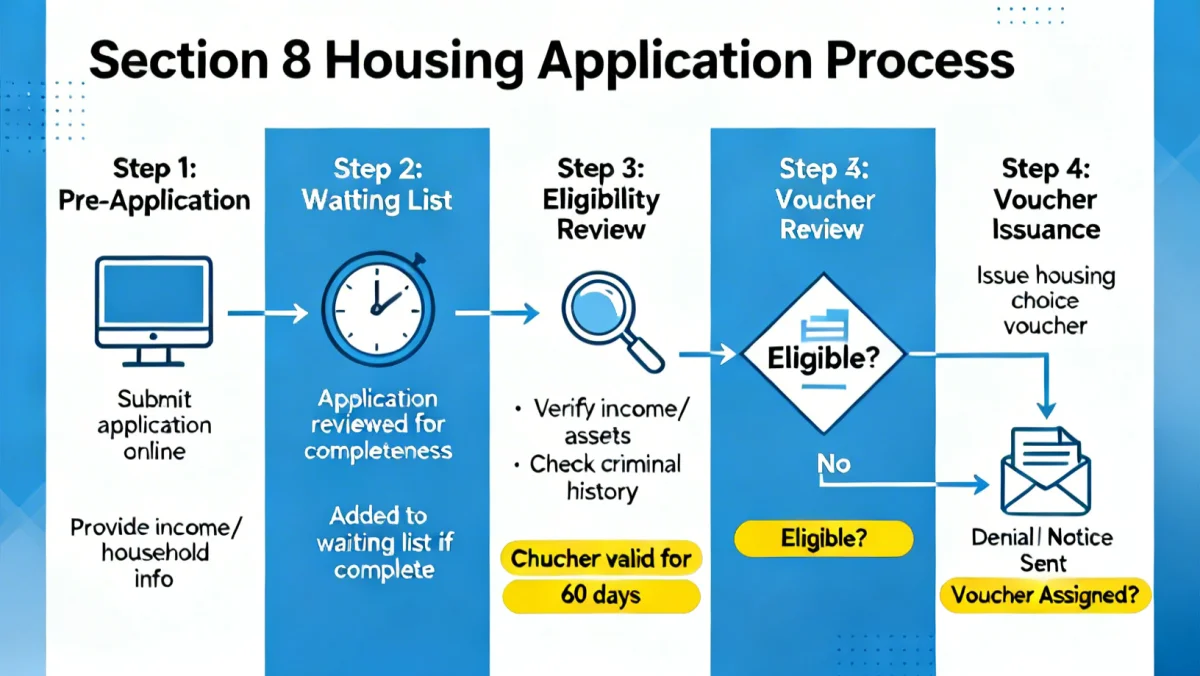
Ultimately, maximizing your application in 2026 involves meticulous preparation, understanding the nuances of waiting lists, and proactive engagement. By taking these steps, you significantly increase your chances of securing affordable housing.
Regional Variations and Local PHA Specifics in 2026
While federal guidelines provide a framework for public housing and Section 8 programs, significant variations exist at the regional and local levels. Public Housing Authorities (PHAs) have considerable autonomy in implementing these programs, leading to differences in application processes, eligibility criteria nuances, and available resources. Acknowledging and researching these local specifics is indispensable for applicants in 2026.
What applies in one city may not directly translate to another, even within the same state. These variations can impact everything from the length of waiting lists to the types of preference points offered, and even the availability of specific supportive services. Therefore, a one-size-fits-all approach to application is unlikely to be successful.
How Local PHAs Interpret Federal Guidelines
Each PHA operates under the overarching guidelines of HUD but has the flexibility to tailor programs to local needs and resources. This means that while federal income limits are set, a PHA might have additional local preference points or specific documentation requirements. For instance, a PHA in a high-cost-of-living area might interpret income limits differently or offer specific programs to address local housing crises.
It is highly recommended that applicants directly contact their local PHA to obtain the most accurate and up-to-date information regarding their specific policies and procedures. Websites, phone calls, and in-person visits can all be valuable avenues for gathering this critical information.
Impact of Local Housing Markets on Program Availability
The local housing market significantly influences the availability and effectiveness of public housing and Section 8 programs. In areas with tight rental markets and high demand, waiting lists can be exceptionally long, and finding landlords willing to accept Section 8 vouchers can be more challenging. Conversely, in areas with more balanced markets, opportunities might be more readily available.
Understanding the dynamics of your local housing market can help manage expectations and inform your strategy. Some PHAs might offer mobility counseling to help voucher holders find housing in areas with more availability or better schools, highlighting the importance of utilizing all available resources.
In conclusion, the success of your affordable housing application in 2026 hinges on a thorough understanding of regional and local PHA specifics. Direct engagement with your local authority and an awareness of local market conditions will significantly improve your chances.
The Role of Advocacy and Support Services in 2026
Beyond individual application efforts, the landscape of public housing and Section 8 in 2026 is also shaped by the crucial role of advocacy groups and supportive services. These organizations often work to influence policy, provide direct assistance to applicants, and offer resources that can be invaluable for navigating complex systems. Engaging with these resources can provide an additional layer of support and insight.
From legal aid societies specializing in housing rights to non-profits offering application assistance, a network of support exists to help individuals secure and maintain affordable housing. Understanding how to access and utilize these services can be a significant advantage, especially for those facing unique challenges or complex situations.
Housing Counseling and Legal Aid
Housing counseling agencies approved by HUD can provide comprehensive guidance on all aspects of seeking and maintaining affordable housing. These counselors can help individuals understand their rights, navigate the application process, and address potential issues that may arise. For 2026, these services will be more critical than ever, given the policy updates.
- Application Assistance: Help filling out forms, gathering documents.
- Tenant Rights: Educating applicants and tenants about their legal protections.
- Fair Housing: Addressing discrimination and ensuring equal access.
- Post-Enrollment Support: Assistance with lease agreements and landlord-tenant issues.
Similarly, legal aid organizations often provide pro bono or low-cost legal services for housing-related issues. If an applicant faces denial, eviction, or discrimination, legal counsel can be instrumental in protecting their rights and advocating on their behalf.
Community Organizations and Non-Profits
Numerous community-based organizations and non-profits are dedicated to assisting individuals and families with housing needs. These groups often have deep local knowledge and can offer tailored support, including:
- Emergency Housing Assistance: For those in immediate crisis.
- Transitional Housing Programs: Bridging the gap from homelessness to stable housing.
- Referrals to Other Services: Connecting individuals to job training, childcare, and healthcare.
- Advocacy for Policy Change: Working to improve affordable housing access at a systemic level.
Engaging with these organizations can provide not only practical assistance but also a sense of community and shared purpose. Many of these groups are at the forefront of understanding and adapting to the 2026 changes, making them invaluable partners in your housing journey.
In conclusion, leveraging the support of advocacy and support services is a smart strategy for anyone navigating the 2026 public housing and Section 8 updates. These resources offer expertise, guidance, and direct assistance that can significantly improve outcomes.
Future Outlook: Anticipated Trends Beyond 2026
While our immediate focus is on the 2026 Public Housing and Section 8 Voucher Updates, it’s prudent to consider the broader trajectory of affordable housing initiatives. The policies enacted in 2026 are not isolated events but rather part of an ongoing evolution in how the United States addresses housing insecurity. Anticipating future trends can help individuals and communities prepare for what lies ahead.
Looking beyond 2026, we can expect continued emphasis on technology integration, sustainable housing practices, and a more holistic approach to resident well-being. These trends will shape the future of affordable housing, making it more efficient, environmentally conscious, and supportive of residents’ overall development.
Technological Integration in Housing Management
The digital transformation is increasingly impacting public housing. Beyond 2026, we can expect greater reliance on online portals for applications, rent payments, and communication with PHAs. Data analytics will likely play a larger role in identifying housing needs and allocating resources more efficiently. This shift will necessitate digital literacy among applicants and residents.
Furthermore, smart home technologies may become more prevalent in affordable housing units, offering benefits such as energy efficiency and enhanced security. PHAs may also leverage technology to streamline maintenance requests and improve overall property management, leading to better living conditions for residents.
Sustainability and Green Housing Initiatives
Environmental concerns are increasingly influencing housing policy. Post-2026, there will likely be a heightened focus on developing and retrofitting public housing units to be more energy-efficient and environmentally sustainable. This could include initiatives such as:
- Solar Panel Installation: Reducing energy costs for both residents and PHAs.
- Water Conservation Systems: Implementing low-flow fixtures and rainwater harvesting.
- Green Building Materials: Using sustainable and healthy materials in construction and renovations.
- Community Gardens: Promoting local food production and green spaces within complexes.
These initiatives not only contribute to environmental protection but can also lead to lower utility costs for residents, enhancing the overall affordability of their homes.
Holistic Approaches to Resident Well-being
The future of affordable housing is moving towards a more integrated model that addresses not just shelter but also the broader determinants of health and well-being. Beyond 2026, we anticipate continued growth in partnerships between PHAs and health organizations, educational institutions, and social service providers.
This holistic approach aims to create communities where residents have access to comprehensive support, including mental health services, childcare, and educational programs, fostering environments where families can thrive. The goal is to move beyond mere housing provision to creating true communities of opportunity.
Considering these future trends, applicants and current residents should remain adaptable and open to new programs and technologies. Staying informed about these evolving facets of affordable housing will be key to long-term success and stability.
| Key Update | Brief Description |
|---|---|
| Income Eligibility | HUD will revise income thresholds based on local Area Median Income (AMI), impacting who qualifies for assistance. |
| Self-Sufficiency Focus | Increased integration of programs like FSS to promote economic independence among residents. |
| Section 8 Payment Standards | Fair Market Rents (FMRs) re-evaluated, potentially altering voucher coverage and housing options. |
| Landlord Incentives | New initiatives to attract more landlords to the Section 8 program, increasing housing stock. |
Frequently Asked Questions About 2026 Housing Updates
The main changes involve recalibrated income thresholds, often tied to local Area Median Income (AMI). These revisions will impact who qualifies for assistance, potentially expanding or contracting the eligible applicant pool. Always check with your local Public Housing Authority (PHA) for specific updated guidelines.
Section 8 payment standards, based on Fair Market Rents (FMRs), are expected to be re-evaluated to reflect current market conditions. This could lead to higher payment standards in some regions, offering more housing choices, while other areas may see more modest adjustments.
The 2026 updates emphasize integrating or expanding programs like the Family Self-Sufficiency (FSS) program. These initiatives offer resources such as job training, educational opportunities, and financial literacy to help residents achieve greater economic independence and long-term stability.
To maximize your chances, gather all required documentation in advance, accurately complete any pre-application forms, and inquire about preference points you might qualify for (e.g., homelessness, veteran status, disability). Proactively follow up with your local PHA.
Local Public Housing Authorities (PHAs) interpret federal guidelines and tailor programs to local needs. They set specific application procedures, preference points, and manage waiting lists. Direct contact with your local PHA is crucial for accurate information on their specific 2026 policies.
Conclusion
The 2026 Public Housing and Section 8 Voucher Updates represent a critical juncture for affordable housing in the United States. By understanding the core changes in income eligibility, payment standards, and the increased focus on self-sufficiency, individuals can significantly improve their prospects for enrollment. Proactive engagement with local PHAs, meticulous application preparation, and leveraging available support services are not just recommendations but essential strategies. As the landscape continues to evolve, staying informed and adaptable will be the most powerful tools in securing and maintaining stable, affordable housing for years to come.