Free Project Management Certifications: 5 Steps in 3 Months
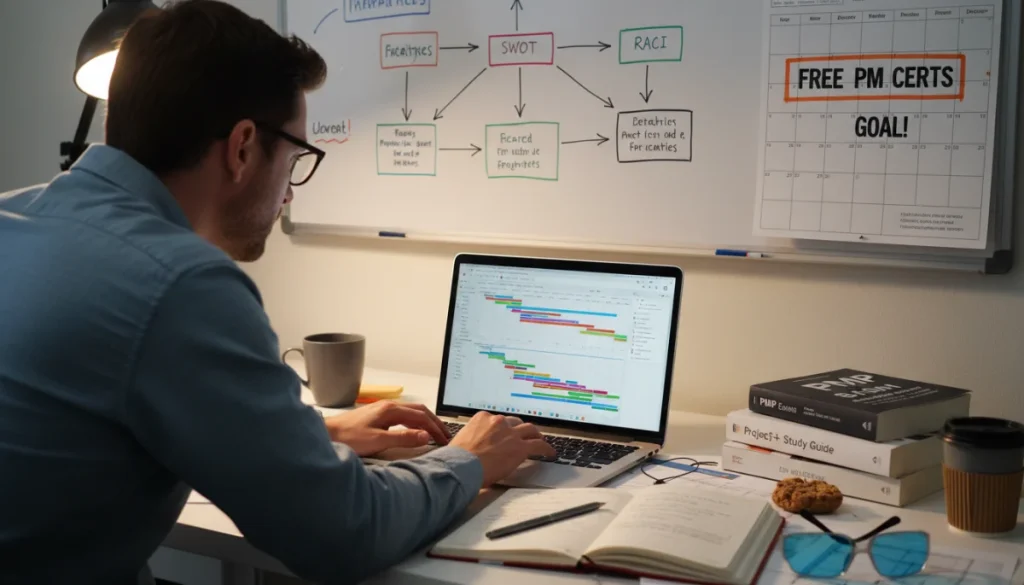
Following a practical 5-step guide allows individuals to earn free project management certifications within three months by strategically utilizing accessible online platforms and dedicated study techniques.
Are you looking to advance your career without breaking the bank? Earning a project management certification can significantly boost your professional credibility and open new opportunities. This guide offers practical solutions: a 5-step guide to earning free project management certifications in 3 months, providing a clear path to achieve this goal efficiently and effectively.
Understanding the Value of Project Management Certifications
Project management is a critical skill set in nearly every industry, from technology and construction to healthcare and marketing. Professionals who can effectively plan, execute, and close projects are highly sought after. Certifications validate these skills, demonstrating a commitment to best practices and a foundational understanding of project management principles. While many certifications come with a hefty price tag, numerous free options can provide a solid entry point or enhance existing knowledge.
These free certifications often serve as excellent stepping stones, helping you understand the core concepts and methodologies before potentially investing in more advanced, paid credentials like the PMP or PRINCE2. They can also be invaluable for those looking to pivot careers or simply add a valuable skill to their resume without financial burden. The key lies in identifying reputable free resources and strategically planning your learning journey.
Why free certifications matter
Free certifications offer several compelling advantages, especially for those new to project management or looking to upskill on a budget. They democratize access to valuable knowledge, allowing a wider range of individuals to gain foundational expertise. This accessibility is crucial in today’s competitive job market, where continuous learning is paramount.
- Cost-effectiveness: No financial investment required for the certification itself.
- Skill validation: Demonstrates a commitment to professional development.
- Career entry point: Provides a credible credential for entry-level roles.
- Learning foundational concepts: Builds a strong base for more advanced studies.
Furthermore, many organizations offer free introductory courses or micro-credentials that can be stacked to build a comprehensive understanding. These smaller, focused certifications allow for flexible learning schedules, making them ideal for busy professionals.
In conclusion, recognizing the immense value of project management certifications, even free ones, is the first step toward leveraging them for career growth. They provide tangible proof of your capabilities and can significantly enhance your professional profile.
Step 1: Identify Reputable Free Certification Platforms
The digital landscape is rich with platforms offering free educational content, and project management is no exception. The challenge isn’t finding content, but rather identifying high-quality, reputable sources that offer genuinely valuable certifications. Your first step is to curate a list of platforms known for their robust course offerings and recognized credentials.
Look for platforms associated with universities, industry bodies, or well-established e-learning providers. These often have structured curricula and assessments that lead to verifiable certificates. While ‘free’ often implies no cost for the course material, some platforms might charge a small fee for the certificate itself, which is still significantly less than full certification programs.
Top platforms for free project management learning
Several platforms stand out for their commitment to offering free or freemium project management education. These resources provide a wealth of knowledge that can be leveraged to earn valuable credentials.
- Coursera: Offers audit options for many university-backed project management courses, allowing free access to lectures and materials.
- edX: Similar to Coursera, edX provides free audit tracks for courses from leading institutions, often including project management fundamentals.
- Google Digital Garage: Features courses on project management basics and related skills, sometimes offering free certificates upon completion.
- Alison: Provides numerous free certificate courses in various aspects of project management, from introductory to more specialized topics.
- Project Management Institute (PMI) Resources: While full PMI certifications are paid, PMI offers a wealth of free articles, webinars, and foundational knowledge that can support your learning journey.
When selecting a platform, consider the course structure, the depth of content, and whether the certificate (if any) is widely recognized. Prioritize platforms that offer hands-on exercises or case studies, as practical application is crucial in project management. This initial research phase is critical for setting a strong foundation for your three-month plan.
By carefully selecting reputable platforms, you ensure that the time and effort invested in earning your free project management certifications will translate into tangible career benefits. This step lays the groundwork for a successful learning experience.
Step 2: Develop a Focused 3-Month Study Plan
Once you’ve identified potential platforms and courses, the next crucial step is to create a structured and realistic 3-month study plan. Without a clear roadmap, even the most enthusiastic learner can lose momentum. This plan should break down your learning goals into manageable weekly or bi-weekly targets, considering your existing commitments and learning style.
Start by assessing the duration and workload of the courses you’ve chosen. If a course is designed for 6 weeks, aim to complete it within that timeframe, or even faster if your schedule allows. Allocate specific hours each week for studying, watching lectures, completing assignments, and reviewing material. Consistency is key to retaining information and progressing steadily.
Structuring your weekly learning goals
A well-structured study plan is the backbone of successful certification acquisition. It helps you stay organized, motivated, and on track to meet your 3-month deadline. Consider incorporating a mix of learning activities to keep things engaging.
- Week 1-4: Foundational Concepts: Focus on introductory courses covering project lifecycle, methodologies (Agile, Waterfall), and key knowledge areas like scope, time, and cost management.
- Week 5-8: Deeper Dive & Tools: Explore more specialized topics such as risk management, stakeholder engagement, and common project management tools (e.g., Trello, Asana for practice).
- Week 9-12: Review & Practice: Dedicate this period to reviewing all learned material, taking practice quizzes, and working through case studies. This is also when you’ll complete any final assessments for your chosen certifications.
Remember to build in buffer time for unexpected delays or to revisit challenging topics. Regularly review your progress and adjust your plan as needed. The goal is to make consistent, measurable progress towards earning your free project management certifications.
Developing a focused 3-month study plan transforms an ambitious goal into a series of achievable milestones. This strategic approach ensures you maximize your learning and successfully acquire your desired certifications within the set timeframe.
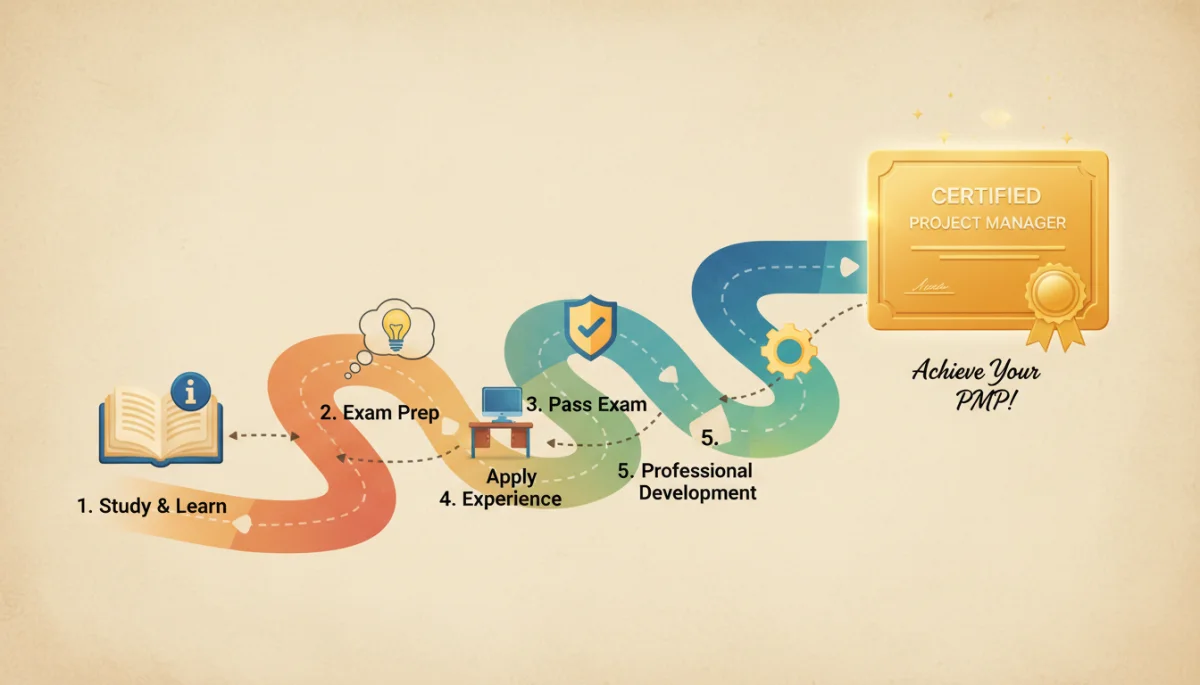
Step 3: Actively Engage with Course Material and Communities
Simply watching lectures or reading notes isn’t enough to truly grasp project management concepts. Active engagement is vital for deep learning and retention. This means not just consuming content, but also interacting with it, questioning it, and discussing it with others. Seek out opportunities to apply what you’re learning, even if it’s through hypothetical scenarios or personal projects.
Many online courses feature discussion forums or community boards. Participate actively in these. Ask questions, answer others’ queries, and share your insights. This not only reinforces your understanding but also exposes you to different perspectives and real-world applications of project management principles. Networking within these communities can also open doors to future collaborations or job opportunities.
Maximizing your learning through active participation
To truly benefit from free project management certifications, you need to go beyond passive learning. Engaging with the material and the learning community can significantly enhance your comprehension and practical skills.
- Participate in forums: Engage in discussions, ask questions, and offer insights.
- Take detailed notes: Summarize key concepts in your own words.
- Complete all exercises: Apply theoretical knowledge to practical problems.
- Seek out practical application: Look for opportunities to use project management principles in daily tasks or personal projects.
- Form study groups: Collaborate with other learners to discuss challenging topics and reinforce understanding.
Beyond formal course materials, consider watching supplementary videos, reading industry blogs, and even following project management thought leaders on social media. The more you immerse yourself in the world of project management, the more naturally the concepts will click into place. This active engagement is a cornerstone of effective learning, ensuring that the knowledge gained from your free certifications is robust and applicable.
Active engagement with course material and the broader learning community accelerates your understanding and solidifies your knowledge, making your journey to free project management certifications more impactful.
Step 4: Leverage Free Tools and Resources for Practical Experience
Theoretical knowledge alone, even validated by a certification, often falls short without practical application. To truly excel in project management, you need hands-on experience. Fortunately, a wealth of free tools and resources are available that allow you to simulate real-world project scenarios and develop practical skills without needing a paid subscription or a formal project role.
These tools range from simple task management applications to more sophisticated project planning software. By experimenting with them, you’ll gain familiarity with the types of platforms used in professional settings, making your free project management certifications even more valuable to potential employers. Don’t just read about Gantt charts; try creating one. Don’t just understand Agile sprints; try to manage a small personal project using Agile principles.
Essential free project management tools and resources
Gaining practical experience is critical for turning theoretical knowledge into actionable skills. Explore these free tools and resources to enhance your learning.
- Trello: Excellent for Kanban-style task management and visual project tracking.
- Asana (free tier): Offers basic project and task management features for small teams or personal use.
- Google Workspace (Docs, Sheets, Slides): Powerful for collaboration, document creation, and basic data analysis in project contexts.
- Jira (free tier for small teams): Provides insight into Agile methodologies and issue tracking, particularly useful for software development projects.
- Miro (free tier): A collaborative online whiteboard for brainstorming, mind mapping, and visual planning.
- OpenProject: An open-source project management software offering a wide range of features for planning, scheduling, and reporting.
Beyond software, look for free templates for project charters, risk registers, and communication plans. Many project management blogs and websites offer these as downloadable resources. By actively using these tools and templates, you’re not just learning about project management; you’re doing project management. This practical exposure will significantly strengthen your resume and prepare you for real-world challenges, making your free certifications truly impactful.
By leveraging free tools and resources, you bridge the gap between theoretical knowledge and practical application, ensuring your free project management certifications are backed by tangible experience.
Step 5: Document Your Achievements and Showcase Your Skills
Earning free project management certifications is a significant achievement, but its impact is limited if you don’t effectively communicate it. The final step in this 3-month guide is to meticulously document your accomplishments and strategically showcase your newly acquired skills to your professional network and potential employers. This involves updating your resume, LinkedIn profile, and potentially creating a small portfolio.
For each certification earned, ensure you have the official certificate or verifiable proof of completion. On your resume, list the certification under a dedicated ‘Certifications’ section, including the issuing body and date of completion. On LinkedIn, add the certifications to your ‘Licenses & Certifications’ section and consider writing a post about your learning journey, tagging relevant organizations.
Effectively presenting your new credentials
Showcasing your free project management certifications and skills is crucial for maximizing their value in your career progression. Think of it as marketing your new expertise.
- Update your resume: Create a dedicated ‘Certifications’ section.
- Enhance your LinkedIn profile: Add certifications and relevant skills.
- Write a LinkedIn post: Share your learning journey and key takeaways.
- Discuss in interviews: Be prepared to talk about what you learned and how you applied it.
- Create a simple portfolio: If you used free tools for mock projects, showcase screenshots or brief descriptions of your work.
- Network strategically: Connect with other project managers and industry professionals, mentioning your new credentials.
Beyond simply listing certifications, be ready to articulate how the knowledge gained from your free project management certifications can benefit an organization. Provide examples of how you’ve applied project management principles, even in personal or volunteer contexts, to demonstrate your practical understanding. This proactive approach ensures your efforts over the past three months translate into tangible career advancement.
Effectively documenting and showcasing your free project management certifications is the culmination of your hard work, transforming your learning into a powerful asset for career growth and new opportunities.
| Key Step | Brief Description |
|---|---|
| Identify Platforms | Locate reputable online sources offering free project management courses and certifications. |
| Develop Study Plan | Create a structured 3-month schedule for consistent learning and course completion. |
| Engage Actively | Participate in discussions, take notes, and apply concepts for deeper understanding. |
| Showcase Skills | Update resume, LinkedIn, and discuss achievements to leverage certifications. |
Frequently asked questions about free project management certifications
While not always carrying the same weight as paid certifications like PMP, many free project management certifications, especially from reputable platforms or universities, are recognized as valuable foundational knowledge. They demonstrate initiative, a commitment to learning, and a basic understanding of key project management principles, making them a good starting point for career development.
To ensure quality, look for courses offered by well-known educational institutions, industry associations, or established e-learning platforms. Check reviews from past students, assess the instructor’s credentials, and review the course syllabus to see if it covers core project management knowledge areas. A strong curriculum and positive feedback are good indicators of quality.
The time commitment varies depending on the course and your prior knowledge. Generally, expect to dedicate 5-10 hours per week for each course to absorb the material, complete assignments, and prepare for assessments. A 3-month plan typically involves tackling one or two comprehensive courses or several shorter micro-certifications in sequence to build a robust skill set.
Yes, free certifications can definitely help, especially for entry-level positions or career transitions. They demonstrate your proactive approach to learning and foundational understanding. Combine them with practical experience, even from personal projects or volunteer work, and strong communication skills to make a compelling case to potential employers. They show you’re serious about the field.
While the course content itself is often free, some platforms might charge a small fee if you want an official, verifiable certificate. This fee is typically optional and significantly lower than the cost of full-fledged paid certifications. Always read the fine print on the platform to understand if there are any charges for certificate issuance or advanced features.
Conclusion
Embarking on the journey to earn free project management certifications within three months is an achievable and highly rewarding endeavor. By systematically following the five steps outlined in this guide—identifying reputable platforms, developing a focused study plan, actively engaging with course material, leveraging free tools for practical experience, and effectively showcasing your achievements—you can significantly enhance your professional profile. These certifications provide a solid foundation, validate your commitment to continuous learning, and open doors to new career opportunities without incurring significant financial costs. Your dedication and strategic approach will undoubtedly pay off in the competitive landscape of project management.