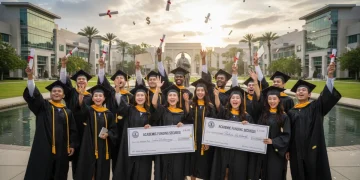
Renewable Scholarships 2026: Secure 4-Year College Funding

Renewable scholarships in 2026 provide continuous financial support for students, covering tuition and expenses for the entirety of their degree program, thereby alleviating financial burdens and promoting academic focus without yearly reapplication stress.
Navigating the financial landscape of higher education can be daunting, but understanding and securing renewable scholarships for 2026 can be a game-changer. These invaluable awards offer consistent funding, alleviating the yearly stress of finding financial aid and allowing you to focus on your academic journey from freshman year through graduation.
Understanding renewable scholarships: a foundation for your future
Renewable scholarships stand apart from one-time awards by offering continuous financial support, typically for the duration of a four-year degree, provided specific criteria are met. This consistent funding mechanism is a cornerstone for many students seeking to finance their higher education without accumulating substantial debt.
Unlike single-year scholarships that require annual reapplication, renewable scholarships often streamline the process, allowing students to maintain their focus on studies rather than constantly seeking new funding sources. This predictability in financial aid can significantly reduce stress and enhance a student’s overall college experience, offering peace of mind through their academic career. The criteria for renewal usually revolve around maintaining a certain GPA, demonstrating continued financial need, or participating in specific extracurricular activities.
What makes a scholarship renewable?
A scholarship is deemed renewable when its terms explicitly state that it can be extended for subsequent academic years. This is contingent upon the recipient fulfilling predefined conditions set by the scholarship provider. These conditions are critical and vary widely between different programs.
- Academic Performance: Most commonly, students must maintain a minimum GPA. This ensures they are performing satisfactorily in their studies.
- Enrollment Status: Full-time enrollment is often a requirement, demonstrating a commitment to completing the degree program within a reasonable timeframe.
- Major or Program of Study: Some scholarships are tied to specific fields. A change in major might affect renewal eligibility.
- Community Service/Extracurriculars: Certain scholarships require ongoing participation in particular activities or volunteer work.
Understanding these foundational aspects of renewable scholarships is the first step toward effectively leveraging them for your educational funding. By meeting the stipulated requirements, students can enjoy uninterrupted financial assistance, paving a smoother path toward their academic and career goals.
Identifying top renewable scholarship opportunities for 2026
Finding the right renewable scholarship opportunities requires strategic research and an understanding of where to look. For students aiming to secure their funding for all four years of their degree starting in 2026, early and thorough investigation is paramount. Many organizations, foundations, and universities offer these coveted awards, each with its unique focus and eligibility criteria.
It is not enough to simply search for ‘scholarships’; instead, one must look specifically for those explicitly stating ‘renewable’ or ‘multi-year.’ This distinction is crucial for long-term financial planning. Focusing on scholarships that align with your academic achievements, extracurricular involvement, community service, and personal background will significantly improve your chances of success. Furthermore, understanding the mission and values of the scholarship provider can help tailor your application to their specific interests.
Where to begin your search
The landscape of renewable scholarships is vast, but several key avenues can lead to promising opportunities. Start by exploring these well-established resources:
- University-Specific Scholarships: Many colleges and universities offer their own renewable scholarships to attract and retain talented students. Check the financial aid pages of your prospective institutions.
- National Scholarship Databases: Websites like Fastweb, Scholarship.com, and the College Board’s scholarship search tool allow you to filter for renewable options.
- Corporate and Foundation Programs: Large corporations and private foundations often fund renewable scholarships as part of their philanthropic efforts. Examples include the Coca-Cola Scholars Program and the Gates Scholarship.
- Government and State Programs: Some state governments offer renewable scholarships, often based on academic merit or specific fields of study critical to the state’s economy.
Beyond these, consider local community organizations, professional associations related to your intended major, and even your high school guidance counselor for leads on lesser-known, yet highly valuable, opportunities. The key is to diversify your search and not rely on a single source. Thoroughly vetting each potential scholarship for its renewal clauses and conditions is an essential step in this process.
Crafting a compelling application: standing out from the crowd
An exceptional application is your gateway to securing renewable scholarships. In a competitive environment, merely meeting the minimum requirements is often not enough; you need to present a compelling narrative that showcases your unique qualities, achievements, and potential. This involves meticulous attention to detail, thoughtful essay writing, and strategic presentation of your academic and personal journey.
Remember that scholarship committees are looking for students who not only excel academically but also demonstrate leadership, resilience, and a genuine commitment to their chosen field or community. Your application should tell a coherent story that highlights why you are the ideal candidate for their specific award, extending beyond just your grades. Every section, from your personal statement to your letters of recommendation, should reinforce this central message.
Key elements of a strong application
To maximize your chances of success, focus on these critical components:
- Academic Transcripts: Ensure your grades are strong and reflect a challenging course load. Highlight any advanced placement or honors courses.
- Standardized Test Scores: If required, aim for competitive scores on the SAT or ACT. Some scholarships are test-optional, so research individual requirements.
- Letters of Recommendation: Choose recommenders who know you well and can speak to your character, work ethic, and potential. Provide them with ample time and information about the scholarship.
- Extracurricular Activities and Leadership: Detail your involvement in school clubs, sports, volunteer work, and any leadership roles. Quantify your impact where possible.
- Personal Essay/Statement: This is your opportunity to shine. Craft a unique, authentic story that answers the prompt, demonstrates your passion, and reveals your personality. Proofread meticulously.
Each piece of your application contributes to the overall impression you make. By taking the time to polish every element, you significantly increase your likelihood of securing those crucial renewable scholarships for 2026 that will support your entire college career. A strong application is a reflection of your dedication and potential, signaling to committees that you are a worthy investment.
Maintaining eligibility: ensuring your scholarship renews annually
Securing a renewable scholarship is a significant achievement, but the journey doesn’t end there. To ensure continued financial support throughout your four-year degree, understanding and diligently meeting the renewal criteria is paramount. These conditions are not arbitrary; they are designed to ensure that scholarship funds continue to support deserving students who maintain their commitment to academic excellence and personal growth.
Many students overlook the importance of regularly reviewing their scholarship’s terms and conditions, often leading to avoidable issues. Proactive management of your academic and personal responsibilities is key to a seamless renewal process. This includes not just maintaining a certain GPA but also adhering to any other stipulations, such as specific credit hour requirements, participation in designated activities, or demonstrating ongoing financial need.

Common renewal requirements and how to meet them
While specific terms vary, most renewable scholarships share common threads in their renewal requirements. Paying close attention to these will help you stay on track:
- Minimum GPA: This is perhaps the most common condition. Understand the exact GPA you need to maintain (e.g., 2.5, 3.0, 3.5) and monitor your academic progress closely. Utilize academic support services if you find yourself struggling.
- Full-Time Enrollment: Most renewable scholarships require continuous full-time enrollment. Dropping below a certain number of credits can jeopardize your funding.
- Major/Program Adherence: If your scholarship is tied to a specific major, ensure any changes are approved by the scholarship provider, or understand the implications.
- Good Standing: This encompasses not only academic performance but also adherence to university codes of conduct. Any disciplinary actions could affect your eligibility.
- Annual Reporting: Some scholarships require an annual report or update on your activities, academic progress, or continued financial need. Be prompt and thorough with these submissions.
It’s advisable to create a personal checklist for each renewable scholarship you hold, detailing all renewal requirements and their respective deadlines. Regular communication with your scholarship provider or university financial aid office can also prevent misunderstandings and provide clarity on any ambiguous terms. By actively managing these aspects, you can confidently secure your renewable scholarships for 2026 for each year of your degree.
Leveraging financial aid offices and resources
The university financial aid office is an invaluable ally in your quest for and maintenance of renewable scholarships. These offices are staffed with experts who can provide personalized guidance, clarify complex regulations, and connect you with opportunities you might otherwise miss. Engaging with them proactively can significantly streamline your financial aid journey.
Beyond just scholarships, financial aid offices can offer advice on grants, loans, and work-study programs, helping you piece together a comprehensive funding strategy. They are particularly useful for understanding the nuances of how different aid packages interact and ensuring you maximize your total financial support without over-borrowing. Building a relationship with a financial aid counselor can provide a consistent point of contact for any questions or issues that arise throughout your college career.
How financial aid offices can assist you
Make the most of the resources available at your institution by understanding the various ways the financial aid office can support you:
- Scholarship Search Assistance: They often have databases of institution-specific and external scholarships, including renewable options, tailored to their students.
- Application Review: Counselors can review your scholarship applications, essays, and financial aid forms (like the FAFSA or CSS Profile) to ensure accuracy and completeness.
- Understanding Terms and Conditions: They can help you interpret the complex renewal criteria of your scholarships and advise on how to maintain eligibility.
- Appeals Process: If your financial situation changes or you face unforeseen circumstances impacting your ability to meet renewal criteria, the office can guide you through the appeals process.
- Budgeting and Financial Literacy: Many offices offer workshops or resources on managing your money, which is crucial for making your scholarship funds last.
Don’t hesitate to schedule regular appointments with financial aid advisors. Their expertise can be the difference between a smooth four years of funded education and unnecessary financial hurdles. Leveraging these resources effectively is a smart strategy for any student relying on renewable scholarships for 2026.
Beyond the scholarship: strategic financial planning for college
While renewable scholarships provide a robust foundation for funding your education, a holistic approach to college finances involves strategic planning that extends beyond scholarship awards. Understanding your overall financial landscape, including potential out-of-pocket expenses, living costs, and emergency funds, ensures a stress-free academic journey. This proactive planning helps mitigate unexpected financial challenges and allows you to fully concentrate on your studies and college experience.
Even with substantial scholarship coverage, there are often gaps that need to be addressed, such as personal expenses, travel, or supplies not covered by the award. Developing a comprehensive budget and exploring supplementary funding options can prevent financial strain. The goal is to create a secure financial environment that supports your academic and personal well-being throughout your degree.
Components of a comprehensive financial plan
Consider these elements when developing your financial strategy for college:
- Detailed Budgeting: Create a realistic budget that accounts for tuition, fees (after scholarships), housing, food, books, transportation, and personal expenses. Track your spending regularly.
- Emergency Fund: Set aside money for unforeseen circumstances, such as medical emergencies or unexpected travel. Even a small fund can make a big difference.
- Part-Time Work or Work-Study: Consider a part-time job or a work-study position to cover incidental expenses and gain valuable work experience.
- Student Loans (as a last resort): If scholarships and savings aren’t enough, explore federal student loans first, as they often have more favorable terms than private loans. Borrow only what you absolutely need.
- Financial Literacy: Educate yourself on managing credit, saving, and investing. These skills will be invaluable during and after college.
By integrating your renewable scholarships for 2026 into a broader financial plan, you create a resilient framework for funding your entire college education. This strategic foresight not only secures your academic future but also equips you with essential life skills in financial management.
The long-term impact of renewable scholarships on your career
The benefits of securing renewable scholarships extend far beyond simply covering tuition costs. These awards have a profound long-term impact on a student’s career trajectory, fostering greater academic freedom, reducing post-graduation debt burdens, and opening doors to advanced opportunities. By alleviating immediate financial pressures, students are empowered to make choices based on their passions and career aspirations rather than monetary constraints.
Graduating with less debt means greater flexibility to pursue lower-paying, yet highly impactful, entry-level jobs, internships, or graduate studies without the immediate pressure of loan repayments. This financial freedom can be a significant advantage in a competitive job market, allowing graduates to invest in their professional development and explore diverse career paths. Moreover, the prestige associated with certain renewable scholarships can enhance a resume, signaling to future employers a strong track record of achievement and potential.
How reduced debt influences career choices
The absence of crushing student loan debt significantly alters a graduate’s initial career options and long-term financial health:
- Freedom to Explore: Graduates can pursue careers in non-profit, public service, or creative fields that might offer lower starting salaries but align better with their values and long-term goals.
- Graduate School Access: Without the burden of undergraduate debt, pursuing a master’s or doctoral degree becomes a more viable and attractive option, leading to higher-paying positions and specialized expertise.
- Earlier Financial Milestones: Reduced debt allows for earlier savings for a down payment on a home, retirement, or other significant life investments, accelerating financial independence.
- Risk-Taking Potential: The ability to take calculated career risks, such as starting a business or joining a startup, is enhanced without the immediate pressure of loan repayments.
Ultimately, renewable scholarships for 2026 are an investment in your future. They provide the financial scaffolding necessary to build a strong academic foundation and launch a career free from the typical financial constraints faced by many college graduates. This proactive financial planning at the outset of your educational journey yields dividends for decades to come, shaping not just your career but your entire financial well-being.
| Key Point | Brief Description |
|---|---|
| Continuous Funding | Renewable scholarships provide financial aid for all four years of your degree, reducing annual stress. |
| Eligibility Maintenance | Meeting specific GPA, enrollment, and activity requirements is crucial for annual renewal. |
| Strategic Application | Crafting a compelling application with strong essays and recommendations enhances your chances. |
| Long-Term Benefits | Graduating with less debt offers more career flexibility and financial freedom post-college. |
Frequently asked questions about renewable scholarships
A renewable scholarship is a financial award that can be extended for multiple academic years, typically for the entire duration of a degree program. Unlike one-time scholarships, it provides continuous funding as long as the recipient meets specific academic and sometimes extracurricular criteria set by the scholarship provider, such as maintaining a minimum GPA or full-time enrollment.
Begin your search on university financial aid websites, national scholarship databases like Fastweb or Scholarship.com, and through corporate or private foundations. Also, check with your high school guidance counselor for local opportunities. It’s crucial to filter your search specifically for scholarships explicitly labeled as ‘renewable’ or ‘multi-year’ to ensure long-term funding.
Common renewal requirements typically include maintaining a specific minimum GPA (e.g., 2.5 or 3.0), continuous full-time enrollment, adherence to a particular major or program of study, and sometimes participation in certain extracurricular activities or community service. Always review the specific terms and conditions outlined by your scholarship provider to ensure ongoing eligibility.
Yes, a renewable scholarship can be lost if the recipient fails to meet the specified renewal criteria. This often includes dropping below the required GPA, changing majors without approval, or not maintaining full-time enrollment. It’s vital to stay informed about your scholarship’s conditions and communicate with the financial aid office if you anticipate any difficulties in meeting them.
Renewable scholarships significantly reduce student loan debt, offering graduates greater financial freedom. This allows for more flexibility in career choices, enabling pursuits in lower-paying but passion-driven fields or continued graduate studies. It also accelerates financial milestones like homeownership or retirement savings, providing a stronger foundation for lifelong financial well-being and career development.
Conclusion
Securing renewable scholarships for 2026 is more than just obtaining financial aid; it’s an investment in a stable and successful academic future. By understanding how these scholarships work, meticulously crafting compelling applications, diligently maintaining eligibility, and combining them with strategic financial planning, students can navigate their entire degree program with significantly reduced financial burden. This proactive approach not only supports academic achievement but also sets the stage for greater career flexibility and long-term financial independence, making higher education a truly transformative experience.